Microsoft Introduces Execution Containers for AI Agents

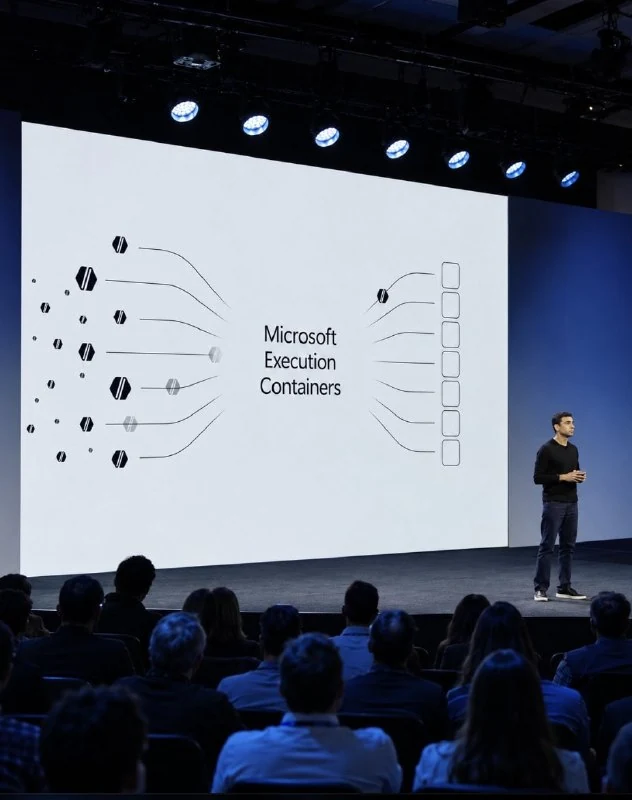
Microsoft Execution Containers (MXC) gives developers policy-based control over AI agent access to files, networks, and system resources on Windows, Linux, and macOS.
Microsoft has introduced a new containerization system for AI agents that works on Windows, Linux, and macOS.
It is called Microsoft Execution Containers (MXC) and lets developers precisely control which files, networks, and system resources an agent can access.
For example, an agent can edit project files and run required tools, but it cannot reach the user's personal files or modify configurations that are allowed only for reading.
The key difference is that the restrictions operate independently of the agent itself: the agent cannot grant itself additional permissions.
MXC uses isolation environments specific to each operating system, including Bubblewrap on Linux. Management is handled through a unified JSON configuration and SDK.
GitHub Copilot, OpenAI Codex, Replit, and OpenClaw already support the system. Claude Code support is planned.
Why it matters
AnalysisIt shifts AI agent safety from prompt-level guardrails to enforceable OS boundaries, reducing the risk of accidental or malicious privilege escalation.
Discuss in community
Share your questions and insights with developers
Related in Ecosystem
Practical guides, core terminology, and agent skills
vulnerability-scanner: security skill for Claude Code, AI agents and MCP servers
A Claude Code skill scans code, AI agents, MCP servers, prompt injections, secrets, dependencies, and CI/CD risks in read-only mode.
Agent Access for Bitwarden and Vaultwarden: secure credential access for AI agents
A new open-source tool called Agent Access lets AI agents retrieve only the passwords and credentials they need from Bitwarden or Vaultwarden without exposing the entire vault.
Claude Code Projects: How a Single AI Orchestrates a Team of Autonomous Agents
A deep dive into Claude Code Projects: Coordinator and Threads architecture, parallel branches, shared memory via MEMORY.md, and cloud agent management.
How to Make AI Agents Safe: Stop Rules, Human Approval, and Sandboxes
An agent in production is a process that can write files, make API calls, change data, and consume tokens autonomously, without pausing and without your involvement at every step.