Karpathy suggests changing LLM response formats to match the task
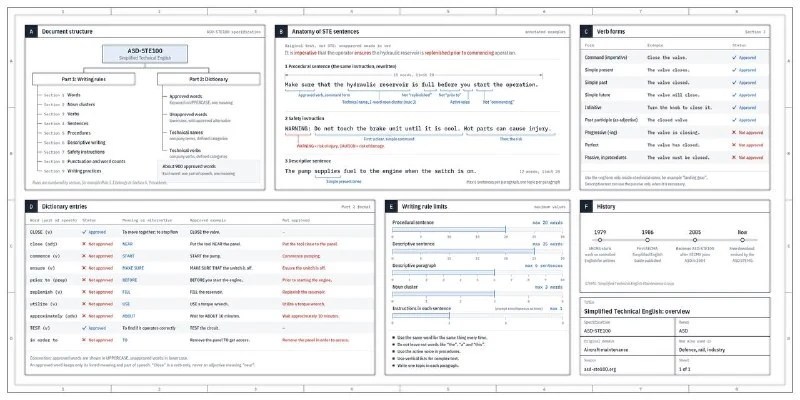
Andrej Karpathy returned with a new idea: plain text is not always the best interface for interacting with large language models.
In his post, he suggested asking models to answer in the format that best fits the task:
- Text explanations: use ASD-STE100, a controlled English standard originally developed for aviation technical documentation. Its limited vocabulary and sentence structure make answers cleaner; Karpathy sometimes asks the model to follow the standard “about 80%” so the text does not become a dry manual.
- Visuals instead of long text: ask for a diagram or image.
- Interactive pages: for more complex topics, generate an HTML page with visualizations and animations.
- One-off videos: the next step Karpathy sees as especially promising is an explanatory video for a specific question, for example in a 3Blue1Brown style with narration through ElevenLabs.
The idea is broader than specific prompts: if code and content generation become cheap enough, a single question can justify creating a disposable mini-app, visualization, or video that previously had no economic sense. According to Karpathy, as models become more autonomous, understanding and supervising their work will take up an increasing share of a person’s time.
Why it matters
AnalysisThis matters because it shifts the focus from prompt wording to response format, which can improve clarity and reduce time spent interpreting model output.
Discuss in community
Share your questions and insights with developers
Related in Ecosystem
Practical guides, core terminology, and agent skills
DOCX and XLSX Formats: When AI Needs to Deliver Production-Ready Documents
A comprehensive hands-on guide to generating and processing DOCX documents and XLSX workbooks with AI: comparing against Markdown and CSV, prompt engineering, formula design, and code automation.
Qwen-4 Max Officially Released: Model for Agents and Long-Horizon Tasks
Qwen-4 Max is positioned as a model for agentic and long-horizon tasks, with lower token usage and reduced cost compared with Qwen-3.8.
Qwen4-Max released: 50% fewer tokens and lower per-task cost
Qwen4-Max introduces a MoE architecture, a 1M-token context window, built-in image support, and significantly lower token usage and cost.
Part I. AI Agent Architecture: The Foundations
The eleven foundational building blocks of modern autonomous agents: model taxonomy, the agentic runtime loop, advanced prompting, distillation, skills architecture, memory systems, function calling, and FinOps.