Cloudflare Invites Developers to Build the Next Git Platform on Its Infrastructure
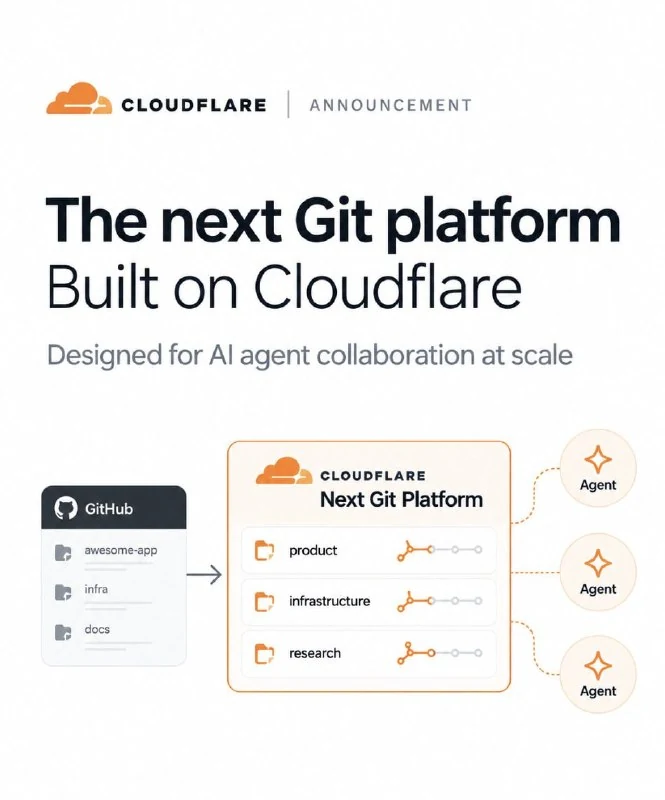
Cloudflare is opening its Artifacts infrastructure to developers, aiming to support Git platforms designed for AI agents that create and manage repositories at scale.
Cloudflare wants to become the company that underpins the entire internet. Now it is inviting developers to build a new Git platform on its infrastructure.
The company believes GitHub was built for a world where humans write code themselves, review changes, and merge them. But when hundreds or thousands of AI agents write code simultaneously, the conventional approach starts to look very different.
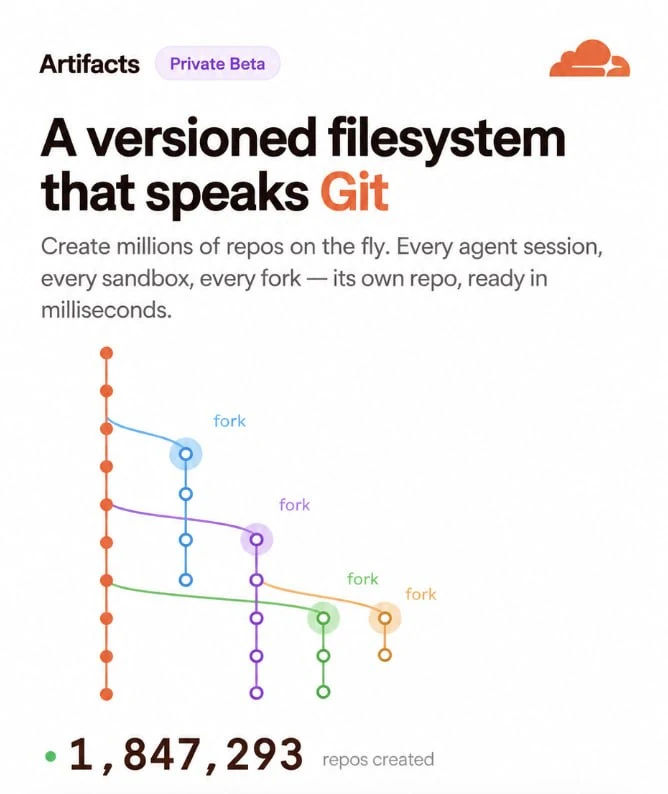
To address this, Cloudflare created Artifacts, a Git-compatible system designed for mass repository creation, forking, and management.
Now the infrastructure is being made available to developers, with an invitation to rethink what Git hosting should look like in the age of AI agents. Cloudflare has even launched a competition to see who will build the best Git platform on top of it.
Why it matters
AnalysisIt signals a shift in developer infrastructure: Git platforms may need to support autonomous agents, not just human workflows.
Discuss in community
Share your questions and insights with developers
Related in Ecosystem
Practical guides, core terminology, and agent skills
Claude Code Projects: How a Single AI Orchestrates a Team of Autonomous Agents
A deep dive into Claude Code Projects: Coordinator and Threads architecture, parallel branches, shared memory via MEMORY.md, and cloud agent management.
Anthropic Introduces Claude Platform OAuth for Connecting Organizations Without API Keys
Claude Platform OAuth lets users connect their Claude organization via OAuth, pay for API usage directly, and revoke access at any time.
Jev and System One AI: A Complete Practical Guide to the Decision Model from TypeSafe
A deep engineering breakdown of the flagship Jev model: System One architecture versus LLMs, Choice/Score/Noul primitives, request parallelism, confidence mathematics, video use cases, code, and an overview of local open-weight alternatives (Laya, GLiNER2.5, CLM-8B).
AI Agents (Autonomous Agents)
Software systems based on LLMs that can autonomously perceive the state of the environment, decompose complex goals, invoke external tools, and iteratively correct their own mistakes.