OpenAI Releases GPT-6.1 Terra
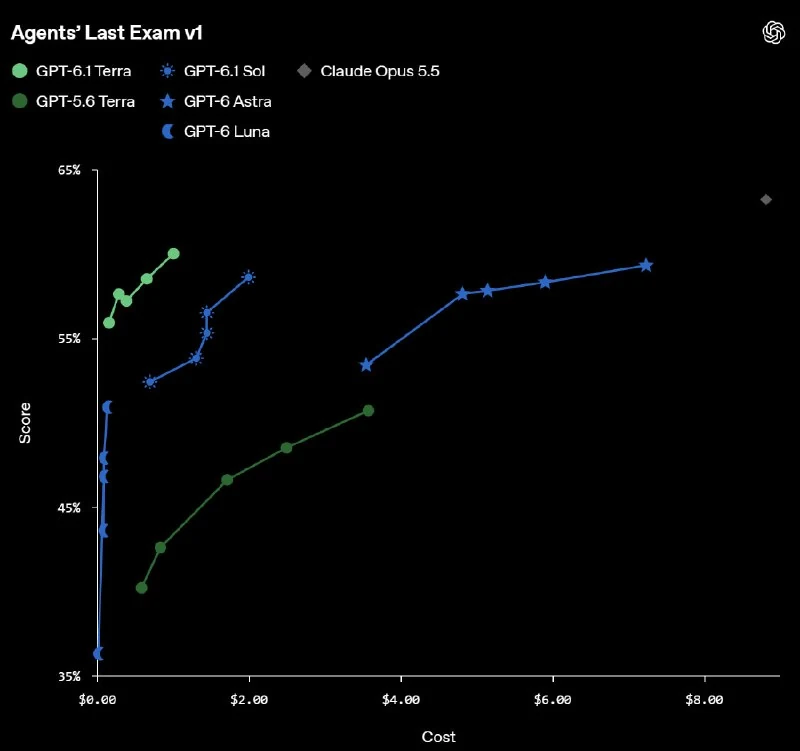
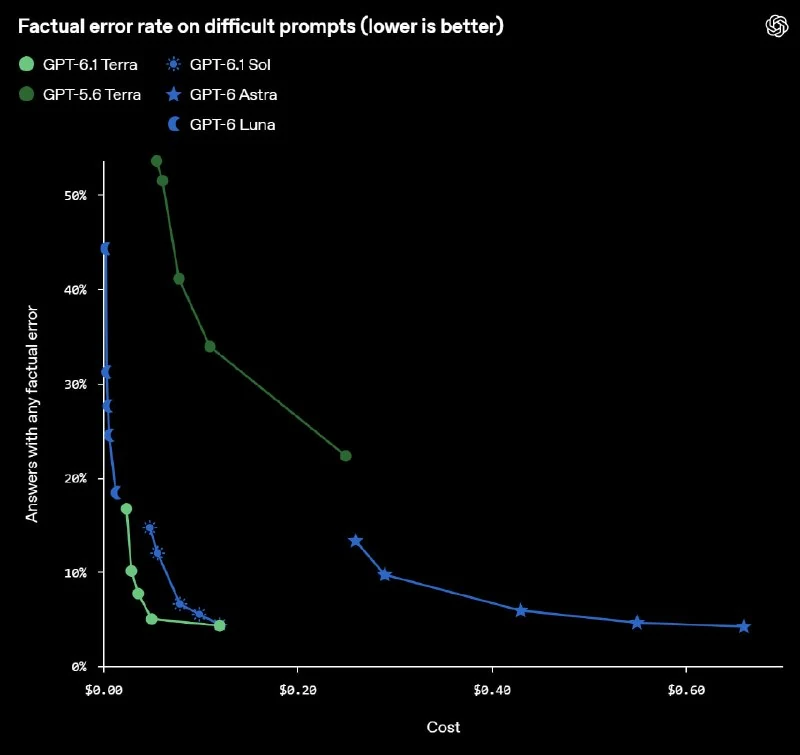
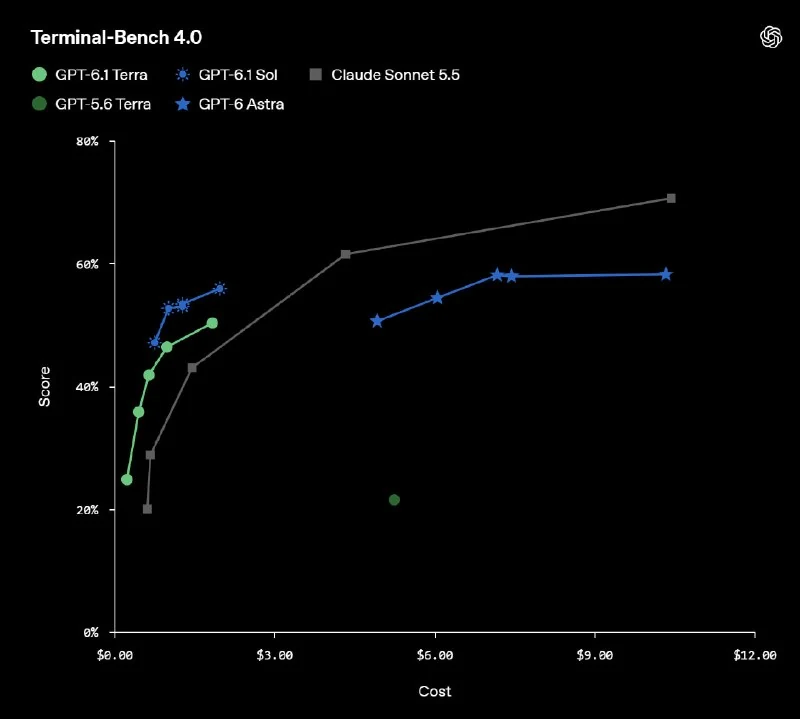
OpenAI has introduced GPT-6.1 Terra, a lower-cost model that is slightly behind Sol but especially strong in computer use.
OpenAI Releases GPT-6.1 Terra
OpenAI has released GPT-6.1 Terra, a new model that is slightly weaker than Sol but comes at a lower price. It is particularly strong in computer use tasks, where it can operate software and interfaces more effectively.
The model is already being rolled out to all paying users. API pricing is listed at $1/$5 per million tokens.
Key details
- GPT-6.1 Terra is the latest OpenAI model release.
- It is slightly behind Sol in overall performance.
- Its main strength is
computer use. - It is available to paying users.
- API pricing: $1/$5 per million tokens.
Why it matters
AnalysisLower-cost `computer use` models can make agent-style automation more accessible for developers and businesses.
Discuss in community
Share your questions and insights with developers
Related in Ecosystem
Practical guides, core terminology, and agent skills
OpenAI releases GPT-6.1 Terra: near Sol performance, half the price, faster coding
GPT-6.1 Terra nearly matches GPT-6.1 Sol on benchmarks while being twice as cheap, with stronger visual understanding, computer use, more natural text, and faster coding.
OpenAI Releases GPT-6.1 Terra
OpenAI has released GPT-6.1 Terra, with the official announcement available on the company's website.
OpenAI GPT (Flagship Models of the GPT Series)
The primary universal line of large language models from OpenAI (GPT-4, GPT-4o). Optimized for complex text analysis, programming, creativity, and daily intellectual tasks.
Part I. AI Agent Architecture: The Foundations
The eleven foundational building blocks of modern autonomous agents: model taxonomy, the agentic runtime loop, advanced prompting, distillation, skills architecture, memory systems, function calling, and FinOps.
Part II. AI Agent Architecture: From Model to Memory and Tools
A deep engineering dive: tokenization, KV-cache, sampling determinism, the training stack, quantization, context engineering, the safety stack, production RAG, ReAct, and multi-agent swarm systems.
Autonomous Browser & Computer Use
Multimodal technology for controlling graphical user interfaces (GUIs) through visual perception of screenshots, cursor emulation, clicks, and keyboard input without using APIs.