China AI stock market: chip and AI shares slump
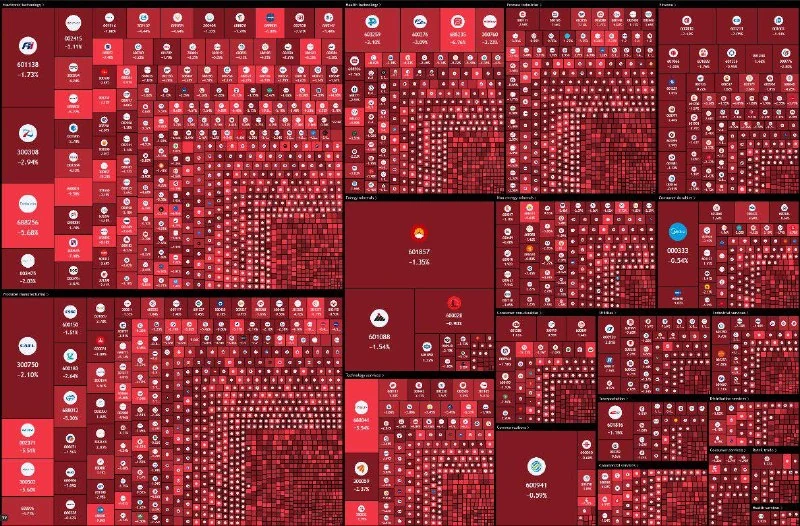
Chinese semiconductor and AI stocks have fallen more than 40% in under four months, losing about $480 billion. Broader market losses since May are estimated at around $2.4 trillion.
The Chinese stock market for AI and semiconductors is showing a sharp correction.
A Reuters article titled “China’s AI bubble has already burst” describes a drop of more than 40% in chip and AI shares in under four months, equal to roughly $480 billion.
Broader market estimates put total losses since May at about $2.4 trillion. In recent days, the decline reportedly accelerated by several hundred billion dollars.
Why it matters
AnalysisThe correction highlights that AI valuations are vulnerable to market sentiment and capital discipline, not only to technical progress. It may affect funding, hiring, and infrastructure investment across the AI ecosystem.
Discuss in community
Share your questions and insights with developers
Related in Ecosystem
Practical guides, core terminology, and agent skills
China’s AI stock correction is not an industry collapse
The fall of China’s STAR Market and AI-linked stocks is a valuation correction, not evidence that the Chinese AI industry has collapsed.
Vibe Coding for Non-Developers: How Marketers, Designers, and PMs Build Products with Claude and Cursor
A practical guide to Vibe Coding without the terminal: 45 techniques for working in Claude and Cursor tailored for marketers, designers, and PMs. From website edits to routine automation.
Hermes Profile: Growth Marketer & Acquisition Funnels
Hermes growth marketing lead profile: product positioning, AIDA/PAS copywriting frameworks, conversion funnels, competitor analysis, and launch campaigns.
Elon Musk Predicts the Death of the Neocloud Market
Elon Musk said lenders are increasingly refusing to finance companies whose only major revenue comes from renting GPUs and AI data centers.
Agent-to-Agent Protocol (A2A)
An open standard for network interaction, decentralized discovery, and secure context exchange between independent AI agents across various vendors and platforms.
Agent Benchmarks: GAIA and SWE-bench
A new generation of rigorous practical benchmarks for evaluating the autonomy of artificial intelligence. GAIA tests multimodal tasks in the open web with files and a browser, while SWE-bench assesses agents' ability to find and fix real bugs in large GitHub repositories.