Zhipu Releases GLM-5.3: New Achievements in AI
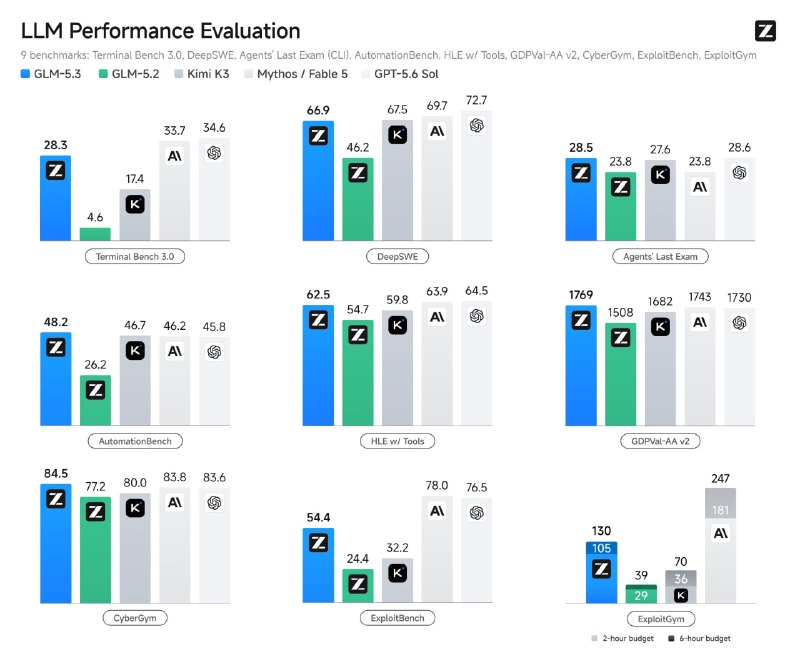
Zhipu has announced the release of the new GLM-5.3 model, which surpasses its predecessor in many metrics. The model is already available for use through the GLM Coding Plan.
Zhipu Releases GLM-5.3
The model utilizes the same base model with 743 billion parameters as GLM-5.2, yet it shows results on par with models that are several times larger.
Growth Compared to GLM-5.2:
- Terminal Bench 3.0: 4.6 → 28.3
- DeepSWE: 46.2 → 66.9
- AutomationBench: 26.2 → 48.2
- HLE with tools: 54.7 → 62.5
- ExploitGym: 39 → 130
- ExploitBench: 24.4 → 54.4
GLM-5.3 is already available through the GLM Coding Plan and ZCode.
Access via API and open weights will be released gradually after stringent security checks.
Why it matters
AnalysisThis is significant as the new GLM-5.3 model demonstrates substantial advancements in artificial intelligence technologies, potentially impacting various application areas. It opens new opportunities for developers and researchers in the AI field.
Discuss in community
Share your questions and insights with developers
Related in Ecosystem
Practical guides, core terminology, and agent skills
JSON — Structured Data for Programs, APIs, and AI Agents
A complete hands-on guide to JSON: syntax specifications, serialization via parse and stringify, REST API consumption, JSON Schema validation, and structured outputs for LLMs.
DOCX and XLSX Formats: When AI Needs to Deliver Production-Ready Documents
A comprehensive hands-on guide to generating and processing DOCX documents and XLSX workbooks with AI: comparing against Markdown and CSV, prompt engineering, formula design, and code automation.
Binance publishes investigation into $6.3 billion theft
Binance’s investigation links the theft to a modified Homebrew download, a fake interview and abuse of an internal AI tool.
Reddit user explains why Claude Code weekly limits are burning almost 4x faster
A Reddit user compared token usage across two weeks and found that each 1% of Claude Code's weekly limit now yields far fewer output tokens, pointing to subagents, reasoning time, and UI refresh requests as likely causes.