OpenAI Unveils Its Own Jalapeño Chip for LLMs
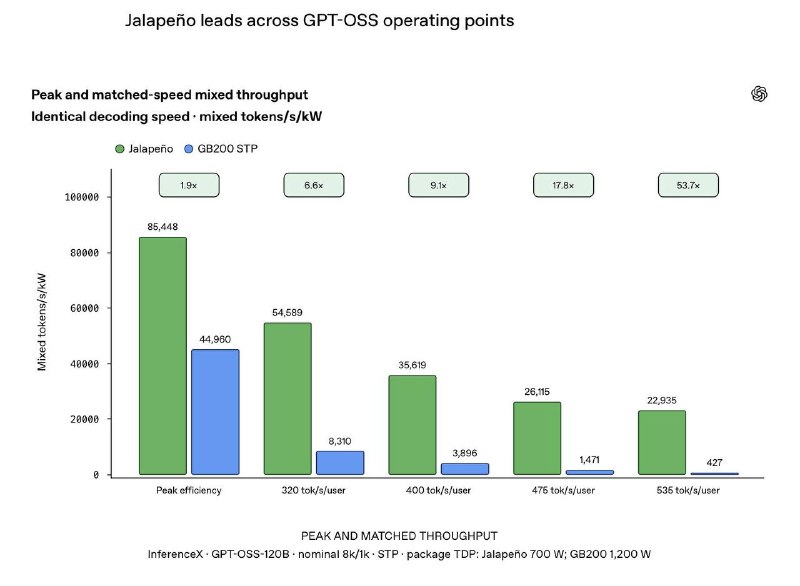
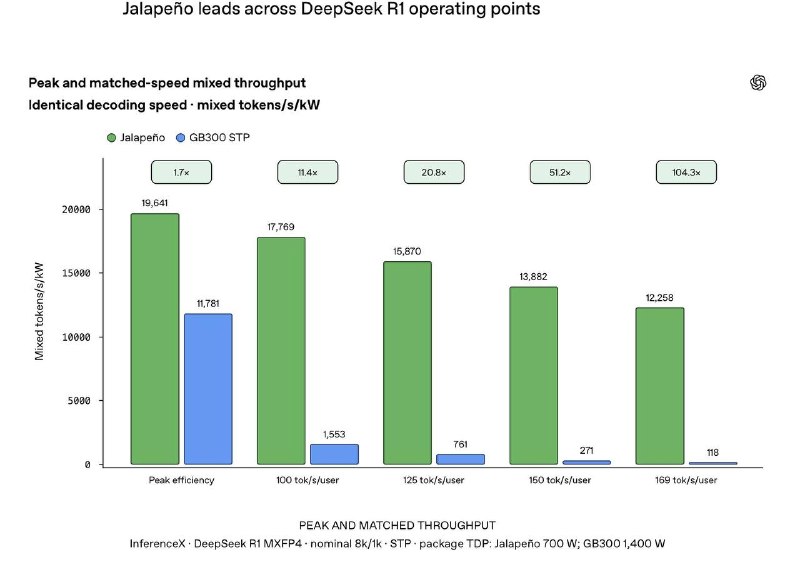
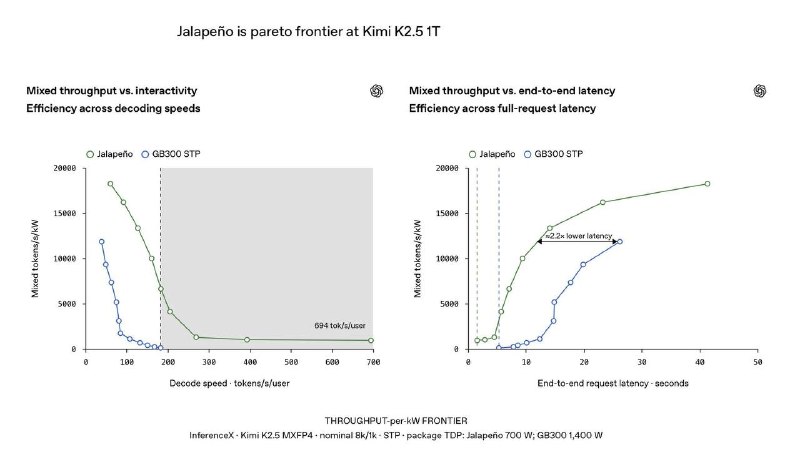
OpenAI has developed a new chip called Jalapeño, specifically designed for LLM inference. It is expected to outperform Nvidia chips by 2.1 to 4.1 times in performance.
OpenAI Unveils Its Own Jalapeño Chip for LLMs
OpenAI, in collaboration with Broadcom, has developed a new chip named Jalapeño, specifically designed for the inference of large language models (LLMs) and related systems like Codex.
Currently, the chip is undergoing testing, but early results are already available. According to these results, Jalapeño outperforms Nvidia's GB200 and GB300 chips in terms of speed and efficiency. For high-interactive workloads, the performance of the new chip is reported to be 2.1 to 4.1 times higher.
It is planned that the chip will be put into use by the end of 2026.
Why it matters
AnalysisThis chip could significantly impact the data processing market by providing higher performance for large language models. It also highlights the increasing competition among tech companies in the AI sector.
Discuss in community
Share your questions and insights with developers
Related in Ecosystem
Practical guides, core terminology, and agent skills
Four Resume Tips from OpenAI’s Head of Applied AI Development
Wulfie Bain, OpenAI’s head of applied AI development, shared four resume rules: keep it short, remove irrelevant details, highlight outcomes, and lead with the strongest achievements.
AI Radar: GPT-6.1 Terra, Gemini 4 Carbon, Mistral Large 4 and OpenAI/Anthropic pricing changes
A roundup of recent AI news: new LLM releases, OpenAI and Anthropic subscription changes, world models, video generation, and research updates.
OpenAI GPT (Flagship Models of the GPT Series)
The primary universal line of large language models from OpenAI (GPT-4, GPT-4o). Optimized for complex text analysis, programming, creativity, and daily intellectual tasks.
Codex Skills for Beginners: Automating AI Agent Workflows
A comprehensive hands-on guide to building and executing Codex Skills: SKILL.md anatomy, explicit vs. auto-triggering, skills vs. scripts vs. tools, Skills API, and safety boundaries.