Token Price Comparison of AI Models: Why Result Cost Matters
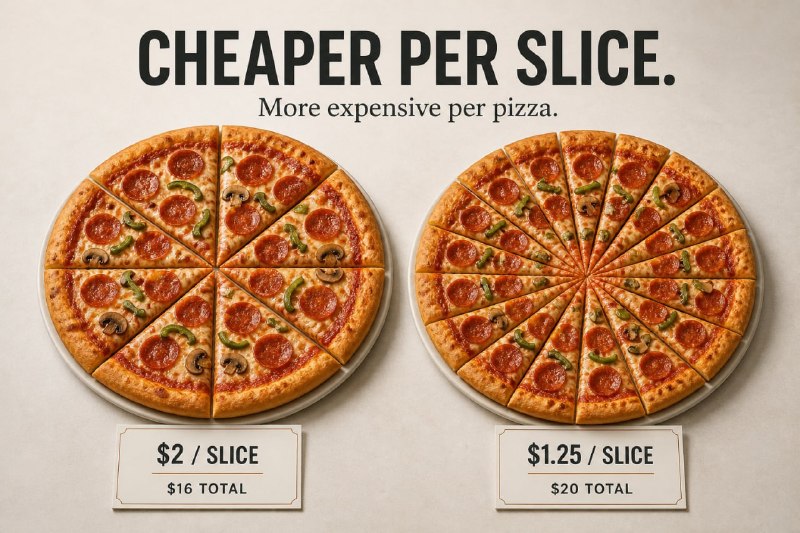
Thibaut from OpenAI raised the question of comparing token prices of different AI models, emphasizing that the cost of the result is more important than the price of a single token.
Thibaut from OpenAI came for Opus.
First, he asked why companies still use Opus instead of Sol and whether price really matters to them.
Then he explained his position in more detail.
"One token from OpenAI does not equal one token from another model."
We compare AI prices in dollars per million tokens as if a token is a standardized unit like a gram or a kilowatt-hour. But that’s not the case.
Thibaut gives a simple example with pizza. One pizza is cut into 8 slices at $2 each, another into 16 slices at $1.25 each. In the second case, a slice is cheaper, but the whole pizza costs more.
The same goes for models. In a small test, GPT-5.6 Sol used 766 tokens for the same text that Claude Opus 5 needed 1,170 tokens for.
That’s 34.5% fewer tokens for the same result.
Therefore, a lower price per million tokens does not necessarily mean that the model is actually cheaper. You need to consider the cost of a successful outcome, not just the price of a single token.
Why it matters
AnalysisThis is important because understanding token costs can significantly impact the choice of AI models for businesses. Properly assessing the cost of outcomes will help companies optimize their technology expenses.
Discuss in community
Share your questions and insights with developers
Related in Ecosystem
Practical guides, core terminology, and agent skills
Four Resume Tips from OpenAI’s Head of Applied AI Development
Wulfie Bain, OpenAI’s head of applied AI development, shared four resume rules: keep it short, remove irrelevant details, highlight outcomes, and lead with the strongest achievements.
Sam Altman Changes X Account Name to Ram Altman
Sam Altman, CEO of OpenAI, changed the display name of his X account to Ram Altman.
GPT Image Generative Models Prompting Guide
OpenAI's gpt-image generative models are designed to produce production-quality visuals and fully controllable creative workflows. They are suitable for both professional design ta...
Claude Sonnet 4.6 vs GPT-5.5 vs Gemini 3.1 Pro: 2026 model comparison
Every few weeks, a new model comes out, and every time the same questions arise: should I switch? what changed what to pay for?