IROS 2024: The Premier Robotics Conference and Autonomous Unitree Humanoids

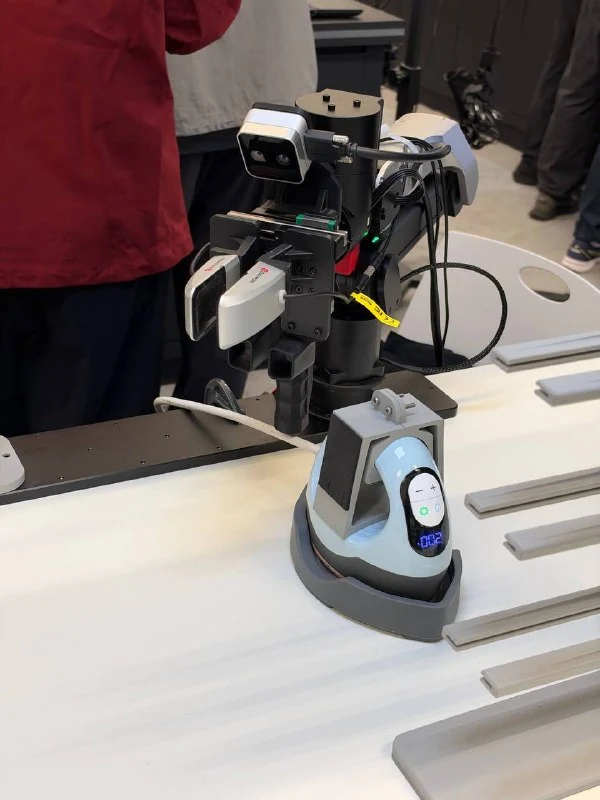

The IROS conference showcased over 1900 papers and live demos, including Unitree G1 humanoids autonomously assembling IKEA furniture and origami-folding robots.
IROS (International Conference on Intelligent Robots and Systems) is one of the two premier global conferences in robotics, alongside ICRA.
This year's program features approximately 1900 papers, along with workshops, live demonstrations, and competitions.
Notable examples of cutting-edge autonomous capabilities include:
Unitree G1humanoids fully autonomously assembling an IKEA children's table.- Bimanual robots folding a paper airplane, which is then judged by an origami master.
These demonstrations highlight the rapid advancements in autonomous manipulation and real-world AI integration.
Why it matters
AnalysisIROS serves as the primary venue for validating breakthroughs in embodied AI and autonomous systems, shaping the future of industrial and service robotics.
Discuss in community
Share your questions and insights with developers
Related in Ecosystem
Practical guides, core terminology, and agent skills
Autonomous AI Operator on Telegram 24/7: Architecture, Telethon, Security, and 10 Production Scenarios
A comprehensive engineering guide to building a production-ready AI operator on Telegram using Telethon: session isolation, confirmation systems, ban protection, and 24/7 deployment.
Claude Code Projects: How a Single AI Orchestrates a Team of Autonomous Agents
A deep dive into Claude Code Projects: Coordinator and Threads architecture, parallel branches, shared memory via MEMORY.md, and cloud agent management.
AI Agents (Autonomous Agents)
An autonomous system based on a large language model that not only responds to messages but independently plans a sequence of actions, utilizes external tools (browser, terminal, databases), and executes complex tasks without constant human oversight.
AI Agents (Autonomous Agents)
Software systems based on LLMs that can autonomously perceive the state of the environment, decompose complex goals, invoke external tools, and iteratively correct their own mistakes.