Cannabis Producers Pivot Toward AI Data Centers
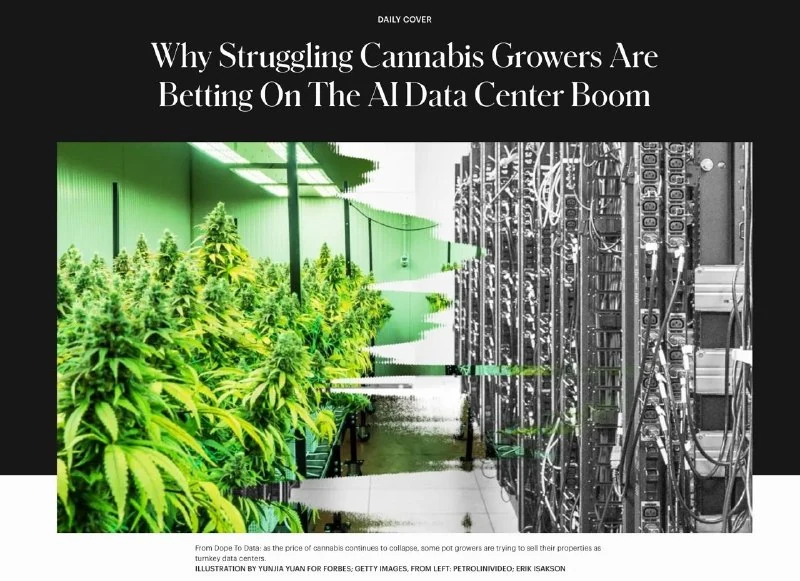
As cannabis prices collapse, some producers with existing industrial sites are trying to repurpose their power, water, climate-control, and fiber assets for AI data centers.
The record collapse in cannabis prices is pushing some producers to look for new ways to monetize existing capacity. Many already operate large industrial sites with strong power and water supply, climate control, and fiber-optic infrastructure — resources that could make them attractive candidates for AI data centers.
Key advantages often cited:
- high-capacity power supply;
- water availability;
- climate control;
- fiber connectivity.
At the same time, moving from cannabis production to AI infrastructure remains complex and uncertain: it requires technical expertise, regulatory compliance, network reliability, and significant capital. Read more
Why it matters
AnalysisIt shows how surplus industrial capacity may become a resource for AI infrastructure when traditional markets decline.
Discuss in community
Share your questions and insights with developers
Related in Ecosystem
Practical guides, core terminology, and agent skills
Energy and Water: The Ecology of AI Data Centers
An analysis of the real carbon, energy, and water footprints of the artificial intelligence industry. It explains why model training and daily millions of generations require gigawatts of electricity and millions of liters of drinking water for cooling, and why Microsoft, Google, and Amazon are transitioning to nuclear energy.
100+ Prompts for Visualizing Data from Files
A practical guide to automated chart generation with VibeChart.ai: step-by-step workflow, chart selection matrix, and 100 battle-tested prompts for business analytics.
JSON — Structured Data for Programs, APIs, and AI Agents
A complete hands-on guide to JSON: syntax specifications, serialization via parse and stringify, REST API consumption, JSON Schema validation, and structured outputs for LLMs.
Vector Metadata Filtering & Hybrid Routing
This technology combines semantic vector search with strict deterministic SQL/NoSQL filters on fields (tenant_id, version, role, date) before calculating vector distances.