GPT-6.2 Astra and Sol: pricing, benchmarks, and mixed community reaction
OpenAI’s GPT-6.2 Astra and Sol bring cheaper Astra pricing and improved Sol quality, but early community feedback points to loops, readability issues, and weaker jailbreak resistance.
What changed
- Astra is 20% cheaper, and cached tokens are 60% cheaper.
- Sol kept its previous price but noticeably improved in quality. On FrontierCode 2.0 it trails Astra by only 0.5 points.
Community reaction
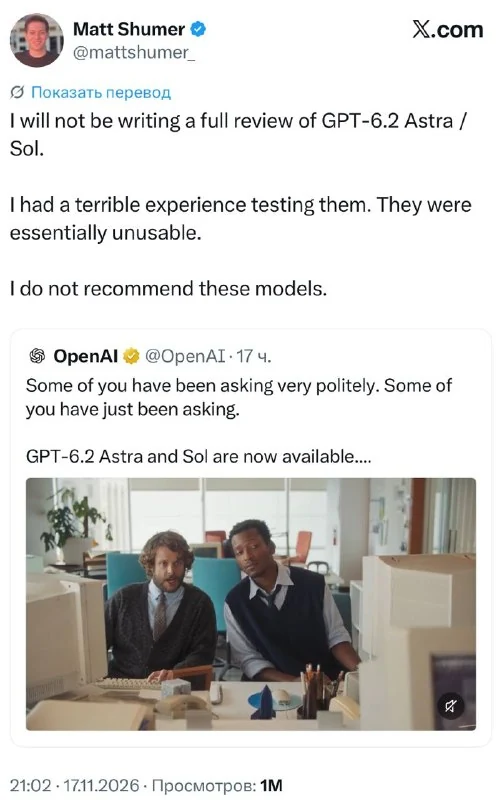
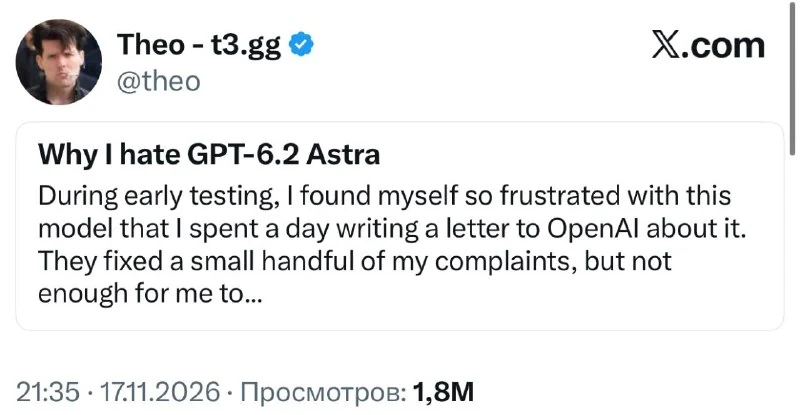
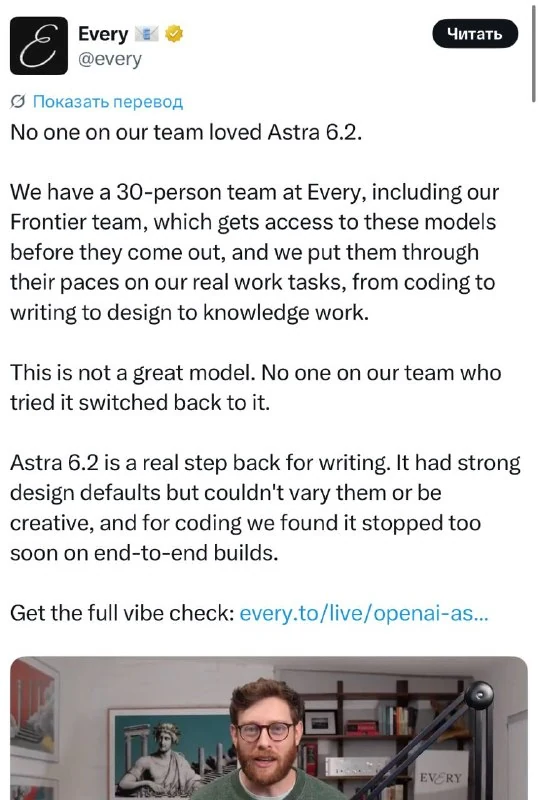
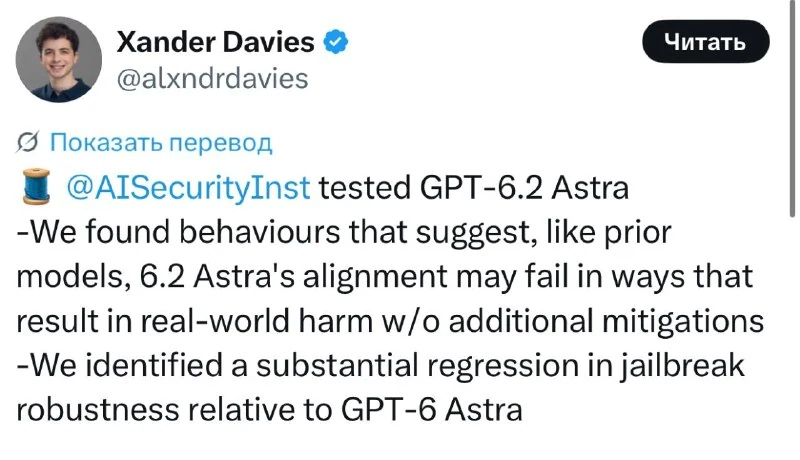
The new Astra, which OpenAI released right before Anthropic’s IPO, was not universally welcomed. On X and developer forums, users and even whole teams reported disappointment with the model.
The most common complaints include:
- getting stuck in its own loops;
- losing track of steps;
- producing unreadable text and explanations;
- being weaker against jailbreaks.
Developers say the model is genuinely good for one-shot projects and code review, but for everyday work it still falls short of Opus 5.5.
What are your impressions?
Why it matters
AnalysisThis matters because pricing changes and rapid releases do not automatically translate into production reliability; benchmark gains may not remove real-world failure modes.
Discuss in community
Share your questions and insights with developers
Related in Ecosystem
Practical guides, core terminology, and agent skills
OpenAI Releases GPT 6.2 Astra and Sol
OpenAI has launched GPT 6.2 Astra and Sol, with Astra topping agent benchmarks and offering more competitive token pricing.
Part I. AI Agent Architecture: The Foundations
The eleven foundational building blocks of modern autonomous agents: model taxonomy, the agentic runtime loop, advanced prompting, distillation, skills architecture, memory systems, function calling, and FinOps.
Part II. AI Agent Architecture: From Model to Memory and Tools
A deep engineering dive: tokenization, KV-cache, sampling determinism, the training stack, quantization, context engineering, the safety stack, production RAG, ReAct, and multi-agent swarm systems.
Frontier Models
The most powerful class of artificial intelligence at the forefront of global research (Claude 3.7 Sonnet, OpenAI o3/GPT-4.5, Gemini 2.0 Pro), defining the limits of modern reasoning, autonomy, and coding capabilities.