Android as the Baseline Platform: Why Flexibility in Distribution Wins
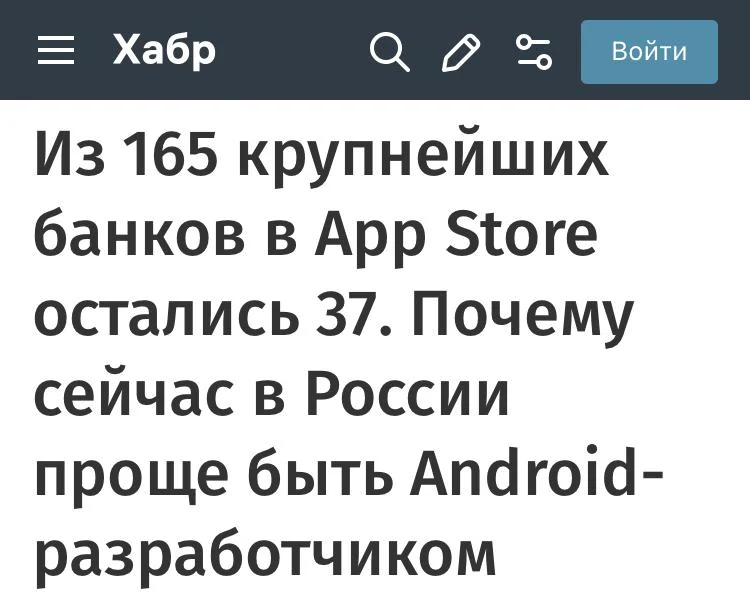
Android is evolving from an iOS alternative into a foundational platform for mass services, driven by flexible distribution channels and developer-friendly tools like Kotlin Multiplatform.
Android is increasingly transforming from an alternative to iOS into a foundational platform for mass-market services. This shift is difficult to explain solely by market share; it is driven by technical flexibility and architectural advantages.
Advantages of the Android Ecosystem
Unlike the closed model of iOS, Android offers developers multiple distribution options:
- Multiple Distribution Channels: Google Play, RuStore, direct APK files, or corporate solutions via MDM (Mobile Device Management).
- Wide Device Coverage: The Android stack has long gone beyond smartphones, successfully running on tablets, smart TVs, smartwatches, POS terminals, kiosks, and industrial or automotive equipment.
Distribution Challenges and Stability
The difference in approaches is particularly evident in the financial sector. Of the 165 largest banks in Russia, only 37 are available in the App Store, while 98 are present in RuStore. This demonstrates that Android developers have "backup airfields": if an app is removed from Google Play, it can be delivered via other methods. The iOS ecosystem currently lacks such alternatives in this market.
For Developers: Transitioning to Kotlin
The technological barrier to moving from Swift to Kotlin is lower than many expected:
- Jetpack Compose: The declarative UI framework for Android has syntax and logic very similar to SwiftUI in the Apple world.
- Kotlin Multiplatform (KMP): Allows writing business logic once and using it simultaneously on Android and iOS, significantly simplifying cross-platform project maintenance.
Conclusion
The focus in mobile product development is shifting from choosing the "most popular" platform to choosing the "most stable" one. Android wins thanks to the ability to guarantee product delivery to the user and update it without critical dependence on a single centralized app store.
Why it matters
AnalysisThis trend reduces the risk of app blocking and simplifies cross-platform development due to the convergence of Compose and SwiftUI technologies.
Discuss in community
Share your questions and insights with developers
Related in Ecosystem
Practical guides, core terminology, and agent skills
Nvidia's Monopoly and the CUDA Platform
An analysis of Nvidia's technological and economic dominance in the AI market. The CUDA (Compute Unified Device Architecture) platform, created in 2006, transformed ordinary gaming GPUs into the planet's primary computational tool, making it difficult for competitors like AMD and Intel to break this monopoly.
Midjourney (Leading Artistic Design Platform)
A premier closed image generator with the highest level of artistic aesthetics. The industry standard for designers, cinematographers, concept artists, and advertising creatives.
How to Build a Custom Design System in Claude Design: From Moodboard to Animated Mascot
Complete practical guide to building a brand design system in Claude Design: visual references, 4 diverging concepts, tokenization, stress-testing, and animated SVG mascot design.
50 Visual Design Styles: A Foundational Guide for Design Systems, UI/UX, and Art Direction
A complete visual dictionary of 50 design styles: aesthetic analysis, color palettes, typography pairings, design system rules, and precise AI control.