"Managing Complexity is the Essence of Programming": Brian Kernighan's Philosophy
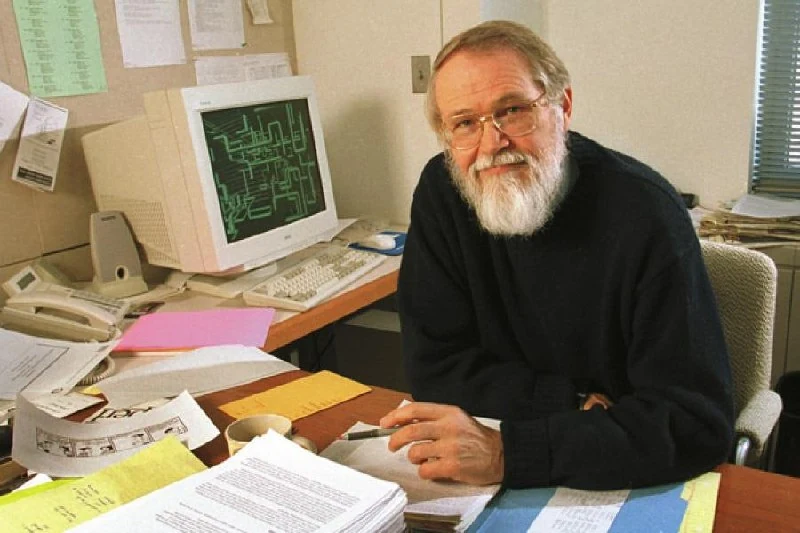
Brian Kernighan's insight on managing complexity in programming and its relevance in the era of AI code generation.
"Managing complexity is the essence of programming."
— Brian Kernighan
This concise yet profound thought from Brian Kernighan, co-author of the C language and Turing Award laureate, is one of the most important principles of software engineering. In an era where AI tools allow us to generate massive amounts of code in seconds, this philosophy takes on new, critical significance.
Complexity as the Enemy
Programming is not just about translating logic into a language the computer understands. It is the process of organizing thought. Code that is hard to read, test, debug, and modify is technical debt that accumulates over time. Kernighan emphasized that true developer mastery is not about creating complex systems, but about simplifying complex tasks.
AI and Managing Complexity
Modern AI assistants, such as Cursor, Claude Code, or GitHub Copilot, can be powerful tools for managing complexity if used correctly:
- Refactoring: AI can suggest ways to simplify "spaghetti" code.
- Documentation: Automated generation of comments and documentation helps developers understand project structure faster.
- Architectural Analysis: Some tools can detect excessive module coupling and suggest decomposition paths.
However, it is crucial to remember: AI does not replace engineering thinking. It can generate code, but the decision on whether that code is too complex to maintain is made by humans.
Practical Advice
- Write code for humans: Computers will execute any syntactically correct code, but your colleagues (and you in a month) need to understand what is happening.
- Avoid premature optimization: Complexity often arises from attempts to optimize things that do not yet need optimization.
- Decomposition: Break large tasks into small, independent modules.
Why it matters
AnalysisIn a world where AI accelerates code generation, the risk of accumulating technical debt increases. Kernighan's philosophy reminds us that simplicity and readability are the primary criteria for software quality.
Discuss in community
Share your questions and insights with developers
Related in Ecosystem
Practical guides, core terminology, and agent skills
AI Slop: Codebase Contamination
A systemic phenomenon of codebase degradation due to the mass addition of low-quality, verbose, overly complex, or duplicated code generated by language models without architectural oversight.
Synthetic Slop Fatigue
Psychological aversion and apathy in engineers caused by hours spent sifting through template-laden, overly verbose, and inelegant machine-generated code.
Claude Code Guide: Setup for Agentic Programming (Beginner-Friendly)
A comprehensive practical guide to setting up Claude Code: CLI installation, CLAUDE.md and settings.json configuration, permission matrices, automated hooks, custom /truth command, and subagents.
How to Build a Custom Design System in Claude Design: From Moodboard to Animated Mascot
Complete practical guide to building a brand design system in Claude Design: visual references, 4 diverging concepts, tokenization, stress-testing, and animated SVG mascot design.