MiniMax Opens Sources MiniMax Code
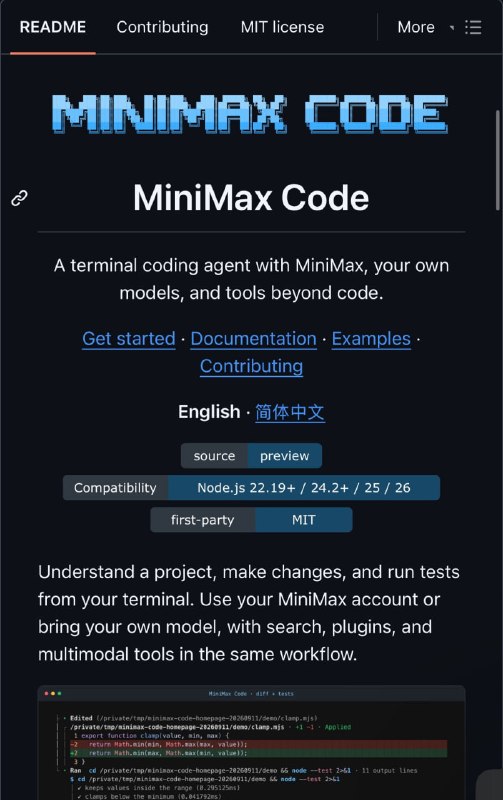
MiniMax has released the source code for its AI coding tool, MiniMax Code, on GitHub, following benchmarks that show superior performance and lower costs compared to competitors.
MiniMax Opens Sources MiniMax Code
Ronny, the Head of Development and Research at MiniMax, announced the publication of the project on GitHub with the following words:
"Built with developers. Now built in the open. See you on GitHub."
This signifies that MiniMax Code, which was initially developed in collaboration with the developer community, is now transitioning to fully open-source development. The repository is available at MiniMax Code on GitHub.
Performance and Cost
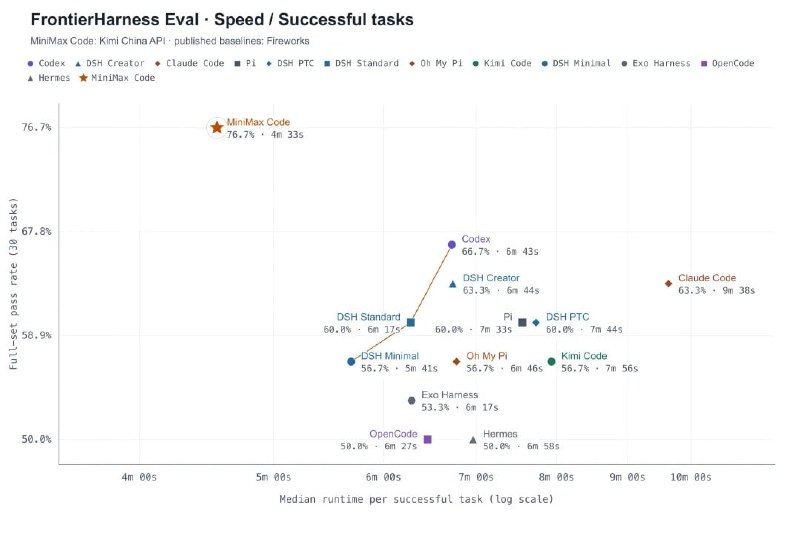
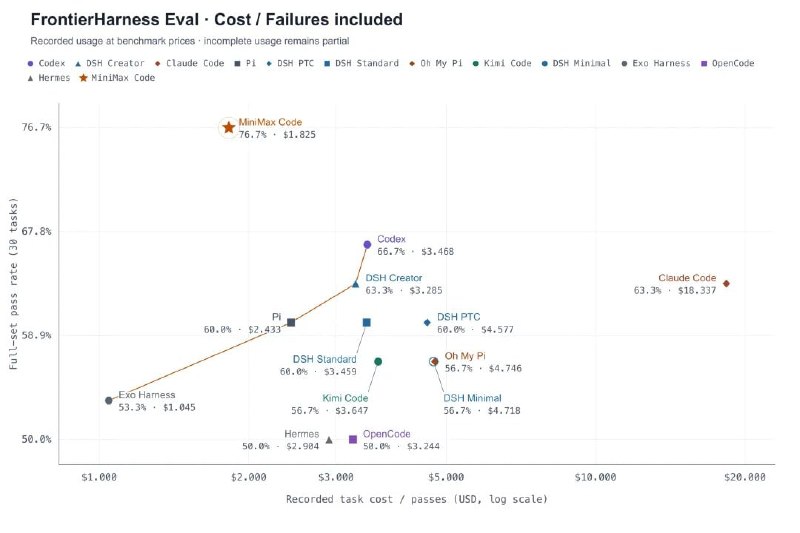
This release is particularly interesting in the context of the company's recent tests. Using the same underlying model and a set of 30 tasks, MiniMax Code achieved the following results:
- Success Rate:
- MiniMax Code: 76.7%
- Codex: 66.7%
- Claude Code: 63.3%
- Average Execution Time:
- MiniMax Code: 4 minutes 33 seconds
- Codex: 6 minutes 43 seconds
- Claude Code: 9 minutes 38 seconds
- Cost per Run:
- MiniMax Code: $1.83
- Codex: $3.47
- Claude Code: $18.34
Why It Matters
The open-source release allows developers to inspect the orchestration layer and understand the technical mechanisms behind the significant differences in speed and cost compared to other AI coding tools.
Why it matters
AnalysisThe open-source release allows the community to analyze the architecture of a tool that demonstrates significantly higher efficiency and lower costs than proprietary alternatives like Codex and Claude Code.
Discuss in community
Share your questions and insights with developers
Related in Ecosystem
Practical guides, core terminology, and agent skills
Working with Git via Claude Code: A Beginner's Guide
A complete hands-on guide to Git integration in Claude Code: smart staging, automated commit messages, merge conflict resolution, GitHub CLI, and safety guardrails.
Harvard Opens Free Detailed Course on ML Systems Engineering
Harvard has opened access to CS249r, a course focused on the infrastructure behind training, inference and deployment of AI models. The materials include TinyTorch, interactive labs, MLSys·im and lecture slides.
10 GitHub repositories that will help you become an AI engineer in 90 days
Becoming an AI engineer today isn't all about models and prompts. Most of the real work is built around agents, RAG systems, orchestration, vector databases, and AI infrastructure.
GitHub Copilot Workspace
GitHub's cloud-based agent development environment transforms GitHub Issues into fully specified and tested Pull Requests without the need for local repository cloning.