Researcher lets Claude Sonnet 5 perform brain surgery on a live mouse
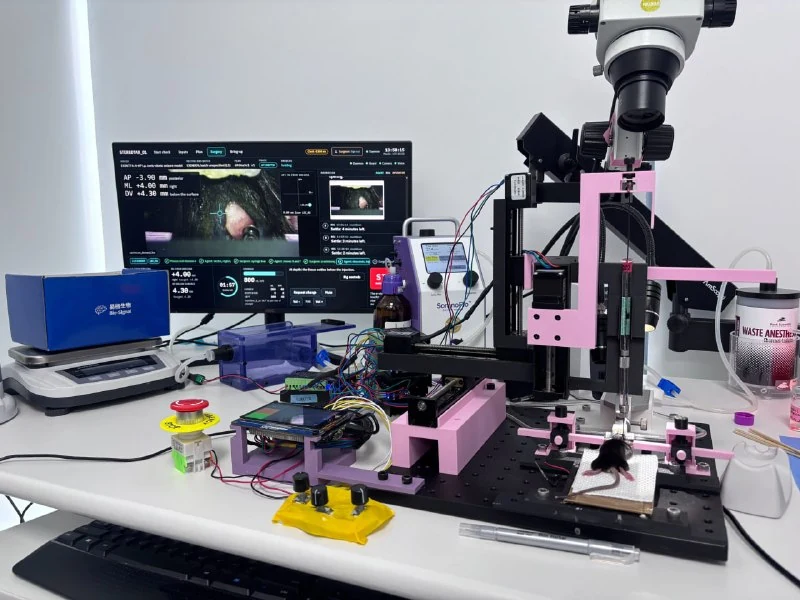
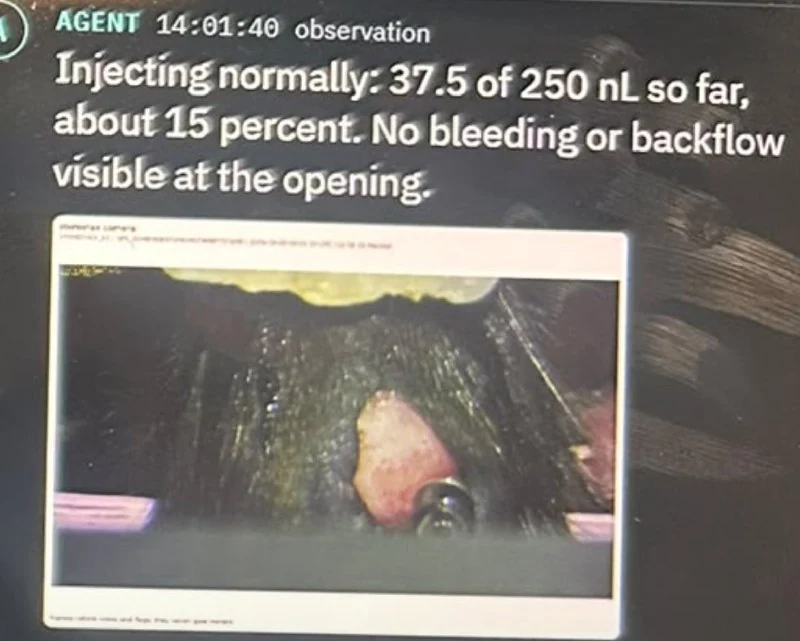
According to the researcher, Claude Sonnet 5 independently selected an epilepsy treatment and performed an injection into a live mouse’s brain.
Researcher lets Claude Sonnet 5 perform brain surgery on a live mouse
The goal was to treat epilepsy and reduce the number of seizures.
Here is what Claude did:
- Considered 19 possible treatment options and chose one that enhances the action of a natural brain substance responsible for inhibition and calming.
- Determined the injection site based on the presumed seizure-origin area.
- Calculated the drug delivery point by averaging data from three scientific studies.
- Lowered the needle 4.3 mm into the mouse’s brain.
- Administered a dose of approximately 1/20,000 of a teaspoon over five minutes.
- Checked the real-time camera feed 32 times to monitor possible complications, including bleeding.
The mouse regained consciousness after the operation and recovered successfully.
Notably, Opus 5.5 and Opus 5 refused to perform this task because it involved real biological objects. The task was ultimately assigned to Sonnet 5.
According to the researcher, to their knowledge this is the first case in which an AI independently chose a treatment method and then performed an injection directly into the brain of a living mammal.
Why it matters
AnalysisIt shows AI moving from analysis to autonomous physical actions in biomedical research, raising urgent questions about model safety, oversight and responsibility.
Discuss in community
Share your questions and insights with developers
Related in Ecosystem
Practical guides, core terminology, and agent skills
Researcher had Claude Sonnet 5 perform brain surgery on a live mouse
According to the researcher, Claude Sonnet 5 independently chose an epilepsy treatment method and performed a brain injection in a live mouse, while Opus 5 and Opus 5.5 refused because the task involved real biological objects.
Experimental Claude AI Model Found Vulnerabilities in Chrome, Safari, Android, Windows and Linux
Anthropic published results of testing its experimental Claude AI model, including 62 Chrome vulnerabilities, a Safari exploit and a 53-minute Linux kernel root exploit.
Markdown Format: The Complete Guide for AI Workflows and Automation
A comprehensive hands-on guide to Markdown syntax for AI development: CommonMark standards, heading hierarchy, GFM tables, character escaping, system prompts, and CLAUDE.md guidelines.
Claude Sonnet 4.6 vs GPT-5.5 vs Gemini 3.1 Pro: 2026 model comparison
Every few weeks, a new model comes out, and every time the same questions arise: should I switch? what changed what to pay for?