HTML tags turn 35: the first 18 elements that built the web
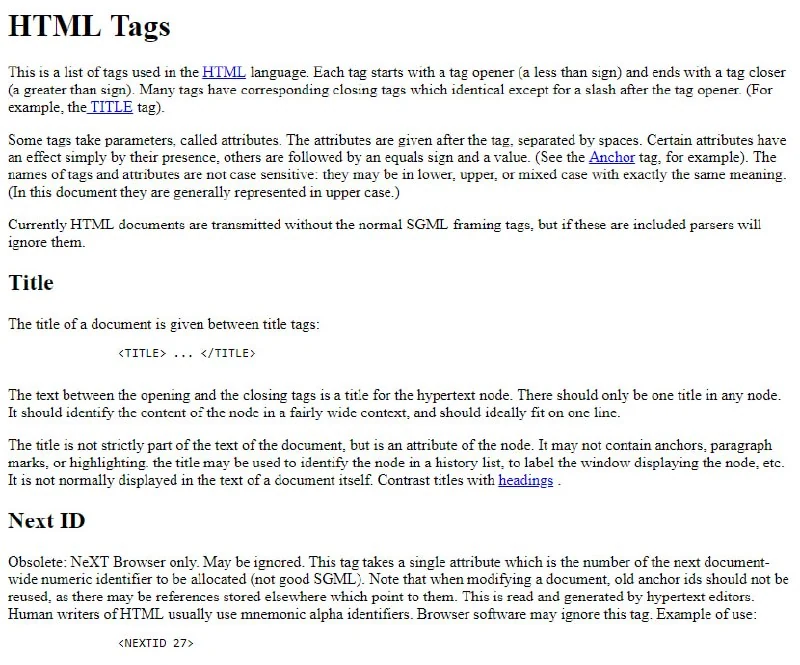
On October 29, 1991, Tim Berners-Lee published the HTML Tags document, describing the first 18 tags that became the foundation of modern web markup.
HTML tags turn 35
On October 29, 1991, Tim Berners-Lee, one of the founders of the World Wide Web, published a document called HTML Tags.
The document described the first 18 HTML tags: <title>, <nextid>, <a>, <isindex>, <plaintext>, <listing>, <p>, <h1> and other headings, <address>, <hp1> and other emphasis tags, <dl>, <dt>, <dd>, <ul>, <li>, <menu> and <dir>.
It was from these simple elements that the history of the markup language began, on which practically the entire internet is built today.
Why it matters
AnalysisThe anniversary shows how a minimal open standard helped the web scale, reinforcing the value of simple and interoperable markup.
Discuss in community
Share your questions and insights with developers
Related in Ecosystem
Practical guides, core terminology, and agent skills
How to Turn Articles into Branded Pinterest Pins with Claude Code
1. What the Tool Does and Which Problem It Solves...
How to Configure Hermes Workspace and Assemble Your First AI Agent Team
Hermes Workspace is a visual dashboard for Hermes Agent: chat, Kanban boards, subagent profiles, skills, and scheduled autonomous tasks.
Delimiters and XML Tags (Structuring Prompts)
A technique for formatting complex prompts using XML tags (<context>, <rules>) and triple quotes (\"\"\"). It helps the model clearly distinguish where your rules end and where the text for processing begins.
Diff-First Mindset: The Art of Reviewing Changes
A fundamental paradigm shift for developers in the AI era (Diff-First Mindset). Transitioning from mechanical text entry to rapid visual assessment of red and green highlighted code changes (git diff) before approval.