A short joke about 'the scientist who proved Riemann'
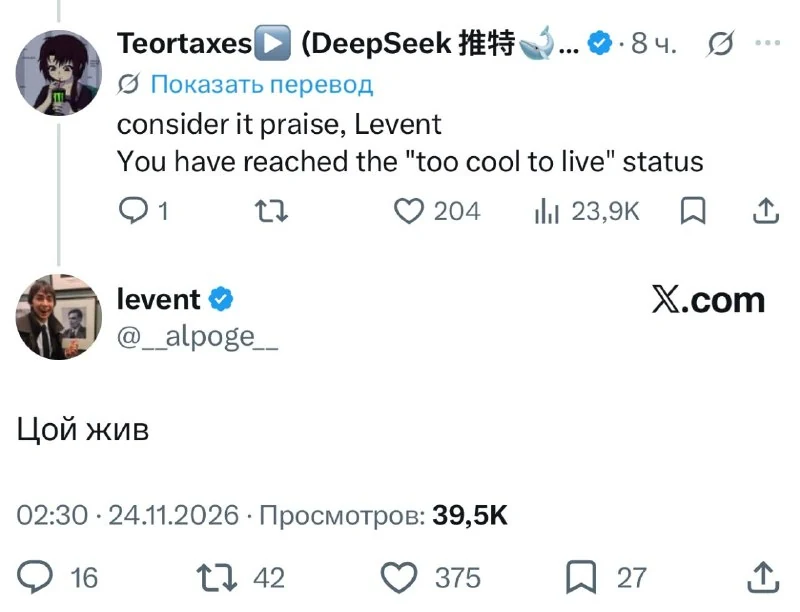
A meme-like phrase about a scientist who allegedly proved Riemann lacks context or evidence.
A brief online joke circulates with the wording: 'A scientist who proved Riemann, like that.'
The phrase does not name a researcher, provide a source, or offer evidence. It most likely refers to the Riemann hypothesis, one of the best-known unsolved problems in mathematics.
Such wording should be treated as a meme rather than a scientific announcement.
Why it matters
AnalysisMeme-like claims can create a false impression that a major mathematical problem has been solved without any verifiable basis.
Discuss in community
Share your questions and insights with developers
Related in Ecosystem
Practical guides, core terminology, and agent skills
Automated Video Editing & YouTube Shorts Creation: Complete Engineering Guide
Local automated video editing and YouTube Shorts pipeline: OpenCV PIP detection, faster-whisper hook discovery, FFmpeg vertical stitching, and AI agent integration.
Short-Term and Long-Term Memory of Agents
The architecture of multi-tier memory for autonomous agents. It distinguishes between Short-Term Memory (active context window of the current session) and Long-Term Memory (vector databases, user profile files, and episodic diaries).
Why a proof of the Riemann hypothesis is compared to an AI breakthrough
Alexandr Wang's essay frames the Riemann hypothesis as a benchmark for AI, linking formal verification in Lean to a new era of machine-driven mathematics.
AMS President Reports Proof of Generalized Riemann Hypothesis Alongside Anthropic Announcement
Ravi Vakil, president of the American Mathematical Society, announced a proof of the Generalized Riemann Hypothesis at the same time as an Anthropic announcement, emphasizing the work was done by a human.