OpenAI Launches Agent Plugins
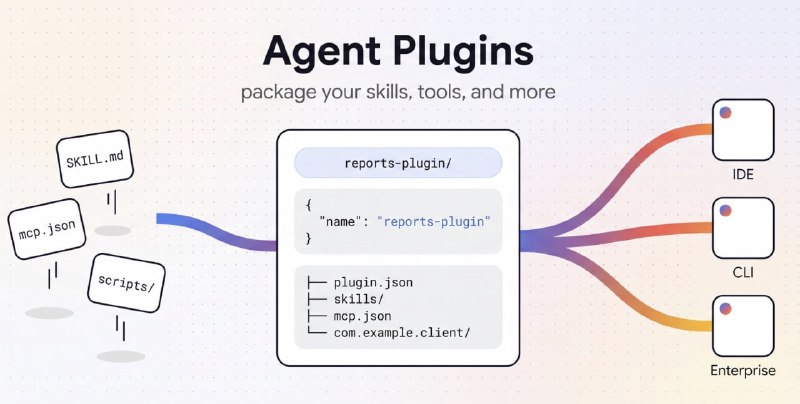
OpenAI has introduced a new open standard for agent plugins that allows for easy integration of various skills across different clients.
OpenAI Launches Agent Plugins
OpenAI has unveiled an open standard for packaging SKILLS and MCP servers, enabling them to be easily utilized across various clients. This standard is supported by major companies such as AWS, Cursor, GitHub, Microsoft, Vercel, and others.
This approach simplifies the integration of different skills into various platforms, which can significantly enhance the capabilities of AI agents in diverse fields.
Why It Matters
The launch of agent plugins by OpenAI could be a significant step in the development of autonomous agents, allowing them to work with various services and platforms, thereby increasing their efficiency and functionality.
Why it matters
AnalysisThis standard can greatly simplify the integration of AI agents into different systems, opening up new opportunities for their use in business and technology.
Discuss in community
Share your questions and insights with developers
Related in Ecosystem
Practical guides, core terminology, and agent skills
Four Resume Tips from OpenAI’s Head of Applied AI Development
Wulfie Bain, OpenAI’s head of applied AI development, shared four resume rules: keep it short, remove irrelevant details, highlight outcomes, and lead with the strongest achievements.
AI Radar: GPT-6.1 Terra, Gemini 4 Carbon, Mistral Large 4 and OpenAI/Anthropic pricing changes
A roundup of recent AI news: new LLM releases, OpenAI and Anthropic subscription changes, world models, video generation, and research updates.
Loop Engineering: Architecture of Autonomous Agentic Loops and the Post-Prompting Era
A deep dive into Loop Engineering: self-sustaining execution loops for Claude Code and autonomous agents, the DOER/CHECKER topology, deterministic verification, the /goal primitive, and reward hacking mitigation.
Claude Code /goal: Autonomous Agent Execution Without Human Intervention
Claude Code is a tool for working with code directly from the terminal. By default, it works in step-by-step mode: you write a request, get an answer, write again. The /goal command fundamentally changes this logic.