OpenAI introduces GPT-6 Cyber, a record-setting model for cybersecurity tasks
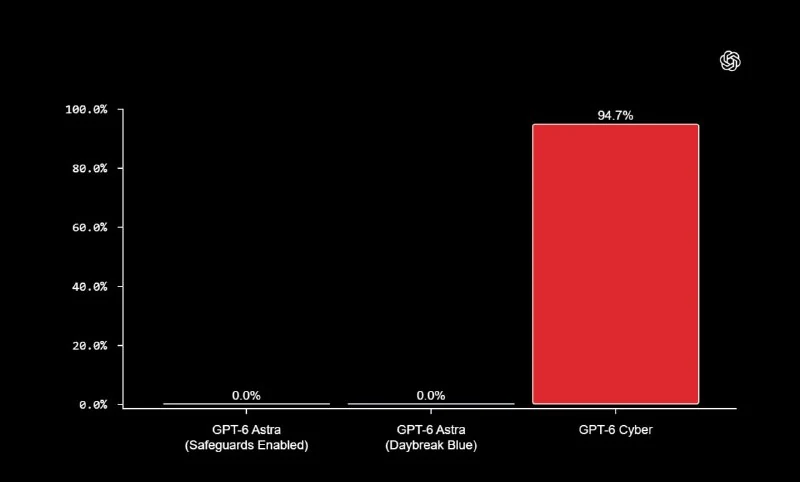
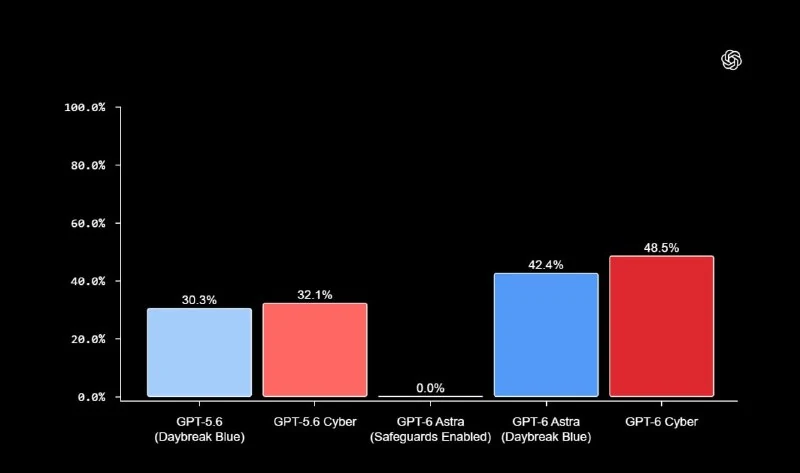
OpenAI reports new cybersecurity benchmark results for GPT-6 Cyber, including a 48.5% score in ExploitGym and the discovery of 81 previously unknown Firefox vulnerabilities, while access remains limited.
OpenAI introduces GPT-6 Cyber, a record-setting model for cybersecurity tasks
According to published results, the model sets a new record in cybersecurity tasks. It scored 48.5% on the ExploitGym benchmark, discovered 81 previously unknown high-severity vulnerabilities in Firefox, and demonstrated how 948 Linux bugs could be used by attackers to expand their capabilities.
For now, GPT-6 Cyber is available in Codex and through the API only to selected participants in the Daybreak Red program.
The expected GPT-6.2 Astra and Sol models did not appear today. The wait continues until tomorrow.
Why it matters
AnalysisSpecialized AI models can accelerate vulnerability discovery and attack-path analysis, but limited access means the near-term impact remains targeted.
Discuss in community
Share your questions and insights with developers
Related in Ecosystem
Practical guides, core terminology, and agent skills
OpenAI introduces GPT-6 Cyber, an AI model that found 948 vulnerabilities in the Linux kernel
OpenAI has introduced GPT-6 Cyber, a specialized AI model that discovered 948 vulnerabilities in the Linux kernel and more than 80 critical flaws in Firefox.
AI Radar: GPT-6.1 Terra, Gemini 4 Carbon, Mistral Large 4 and OpenAI/Anthropic pricing changes
A roundup of recent AI news: new LLM releases, OpenAI and Anthropic subscription changes, world models, video generation, and research updates.
OpenAI GPT (Flagship Models of the GPT Series)
The primary universal line of large language models from OpenAI (GPT-4, GPT-4o). Optimized for complex text analysis, programming, creativity, and daily intellectual tasks.
Part II. AI Agent Architecture: From Model to Memory and Tools
A deep engineering dive: tokenization, KV-cache, sampling determinism, the training stack, quantization, context engineering, the safety stack, production RAG, ReAct, and multi-agent swarm systems.