Linux Desktop Share Reaches Historic High
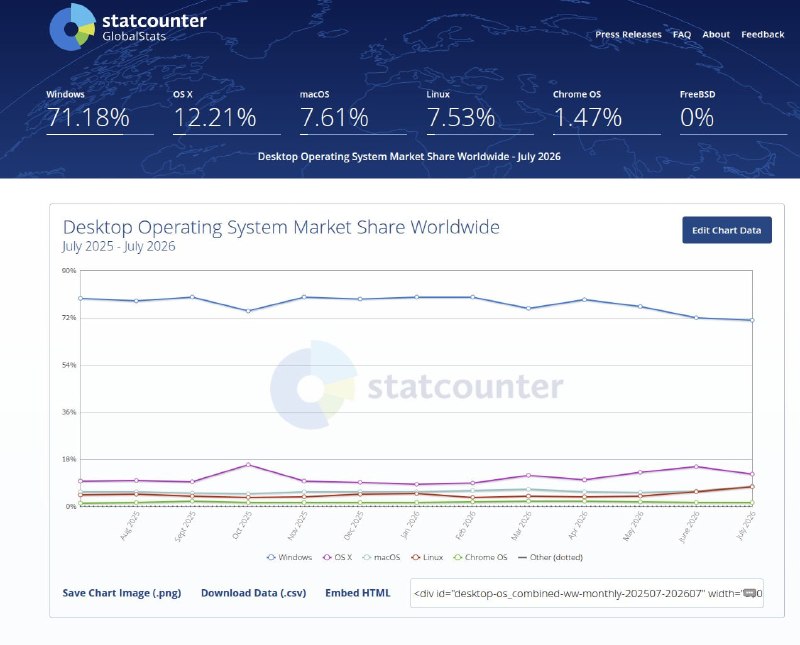
Linux's share on desktops has reached a record high of 7.53% as of July 2026, marking a significant increase in a short period.
Linux Desktop Share Reaches Historic High
As of July 2026, Linux's share on desktops has reached a historic high of 7.53%. This significant increase occurred in just two months, as Linux's share was only 3.81% in May 2026.
What Caused the Increase?
In the last two months, Linux gained approximately 3.72 percentage points. This growth may be attributed to several factors:
- Increasing popularity of open-source operating systems.
- Growing user awareness of the benefits of Linux.
- A rise in the number of available distributions and improvements in their support.
These factors may indicate that Linux is becoming an increasingly attractive choice for desktop users.
Why it matters
AnalysisThe increase in Linux's desktop share reflects a shift in user preferences and could impact the software market. It also highlights the importance of open technologies in today's world.
Discuss in community
Share your questions and insights with developers
Related in Ecosystem
Practical guides, core terminology, and agent skills
How to Run DeepSeek-R1 Locally for Free on Mac, Windows, and Linux
Tired of the limitations of cloud services and constant payments for DeepSeek-R1 API? You are not alone. Many developers, AI users, and researchers want complete control over their data and workflows.
Linux Foundation Offers Free Learning Library for Linux, DevOps and Cloud Technologies
Linux Foundation provides free training materials for learning Linux, DevOps and cloud technologies. The catalog includes courses covering infrastructure and tools for working with cloud platforms.
OpenAI introduces GPT-6 Cyber, an AI model that found 948 vulnerabilities in the Linux kernel
OpenAI has introduced GPT-6 Cyber, a specialized AI model that discovered 948 vulnerabilities in the Linux kernel and more than 80 critical flaws in Firefox.
Jev and System One AI: A Complete Practical Guide to the Decision Model from TypeSafe
A deep engineering breakdown of the flagship Jev model: System One architecture versus LLMs, Choice/Score/Noul primitives, request parallelism, confidence mathematics, video use cases, code, and an overview of local open-weight alternatives (Laya, GLiNER2.5, CLM-8B).