Cloudflare Drop: Deploy a Static Site in Seconds
Cloudflare has introduced a new service called Drop, allowing users to quickly deploy their websites without needing to log into an account.
Cloudflare Launches Drop Service for Quick Website Deployment
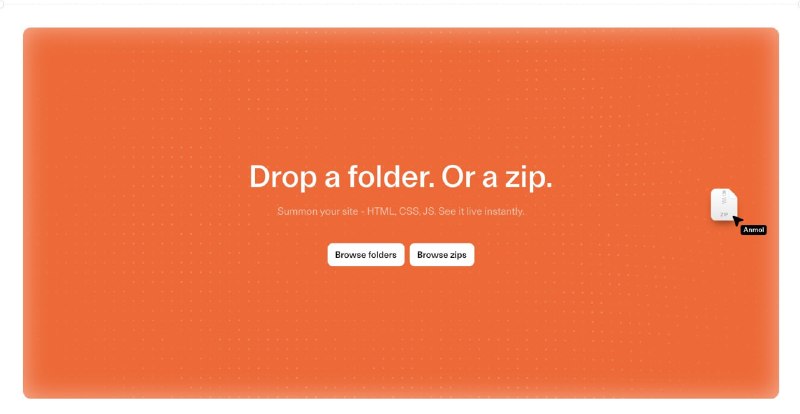
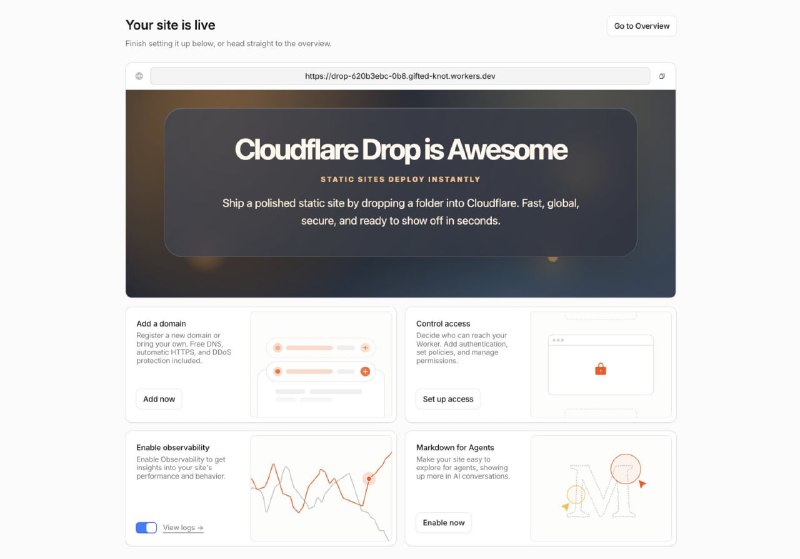
Cloudflare has launched a new service called Drop, which allows users to quickly publish their websites. All you need to do is upload a folder or a ZIP archive, and your site will instantly be available online without the need to log into an account.
Interestingly, just a few days ago, Vercel introduced a similar feature — Vercel Drop. These two long-time competitors often poke fun at each other, but their new features seem to come out almost simultaneously.
For beginners, this is practically the perfect option to quickly and easily publish their website.
P.S. The deployment will be active for 60 minutes. If it is not linked to an account within that time, it will be automatically deleted.
Why it matters
AnalysisThis service simplifies the website publishing process, which is especially beneficial for beginners. Cloudflare's ongoing competition with Vercel drives innovation in web development technologies.
Discuss in community
Share your questions and insights with developers
Related in Ecosystem
Practical guides, core terminology, and agent skills
Google Analytics 4 + Terminal + Claude Code: Analyzing Website Traffic
1. What is GA4 CLI and what problem does it solve?...
Self-Updating AI News Website in Claude Code: Complete Architecture Guide
Step-by-step engineering guide to creating an automated, self-updating newspaper-style AI news website with Claude Code: design prompts, trust boundaries, deduplication, and scheduled routines.
Zero-Downtime Deployment
A methodology and engineering mechanisms for updating production services without interrupting user service, breaking existing TCP connections, or generating HTTP errors 502/503.
Ollama (Local Model Deployment Platform)
A leading open-source tool for easy loading, configuration, and local execution of language models (Llama, DeepSeek, Qwen) with a built-in REST API compatible with OpenAI.