Claude Code Can Wait for a Five-Hour Usage Limit Reset Without an Ultra Subscription
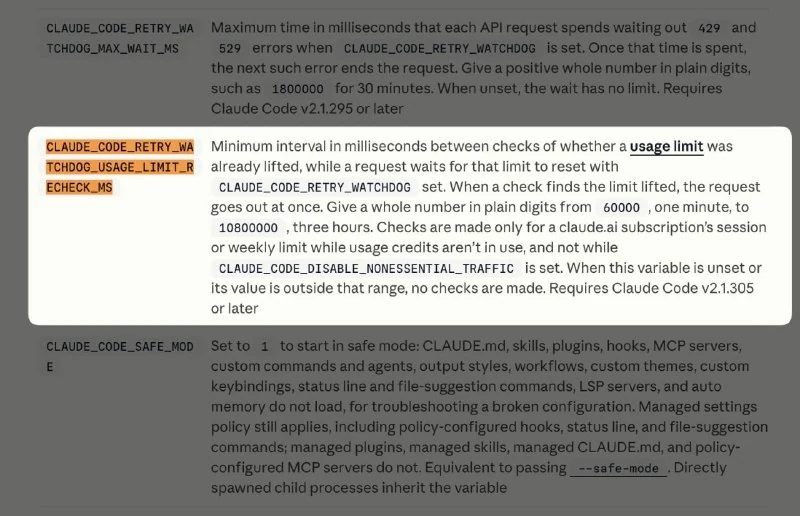
Without an Ultra subscription, Claude Code can be configured to wait for a five-hour usage limit reset and continue tasks automatically.
If you do not have an Ultra subscription, Claude Code can wait for the five-hour usage limit reset on its own and continue executing the task.
Before starting an overnight or unattended run, set the environment variable:
export CLAUDE_CODE_RETRY_WATCHDOG=1
The limit may reset earlier, for example if Anthropic manually resets usage restrictions.
The next variable makes Claude Code check limit availability every 10 minutes and resume the task immediately after the reset:
export CLAUDE_CODE_RETRY_WATCHDOG_USAGE_LIMIT_RECHECK_MS=600000
And the environment variable name speaks for itself.
Why it matters
AnalysisThis makes long-running autonomous Claude Code sessions easier to manage without a paid Ultra subscription, reducing the chance of tasks stopping because of usage limits.
Discuss in community
Share your questions and insights with developers
Related in Ecosystem
Practical guides, core terminology, and agent skills
When Claude Code Asks for Command Permission Right in the Middle of a Shower
A light developer observation about how AI coding tools can interrupt workflows at the worst possible moment.
Andrej Karpathy Built HackerTube, a YouTube Recommendation Alternative, with Claude Code
AI researcher Andrej Karpathy says he built HackerTube in two hours using Claude Code and Opus 5.5, creating a personalized video catalog based on Hacker News comments.
Claude Code Projects: How a Single AI Orchestrates a Team of Autonomous Agents
A deep dive into Claude Code Projects: Coordinator and Threads architecture, parallel branches, shared memory via MEMORY.md, and cloud agent management.
MCP Servers and Claude Code: A Practical Guide to Connecting and Building
How to expand Claude Code's capabilities with Model Context Protocol: connecting the filesystem, GitHub, PostgreSQL, Brave Search, and developing a custom server in TypeScript.