98% of Linux Kernel Git Server Traffic Comes from Bots
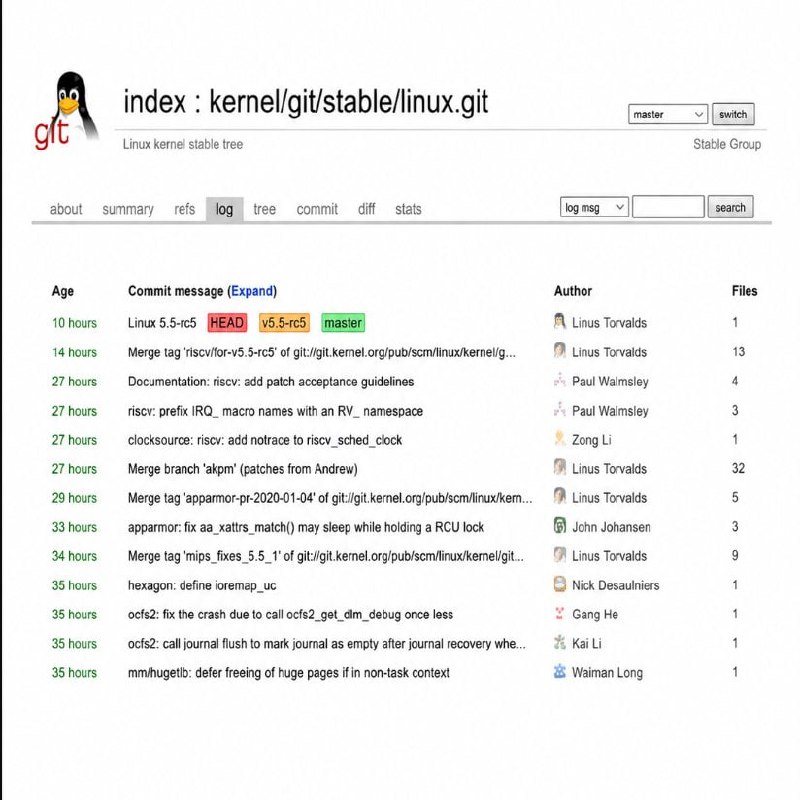
The Linux kernel Git server receives an astonishing 98% of its traffic from bots, threatening its infrastructure.
98% of Linux Kernel Git Server Traffic Comes from Bots
According to estimates, the Linux kernel Git server receives 98% of its traffic from bots and only 2% from real users. Konstantin Ryabtsev, the administrator of git.kernel.org, published these figures in a post titled "Creepy crawlies."
The site receives around 6 million requests per day to random commits. Almost all of this traffic, it seems, is unrelated to real users.
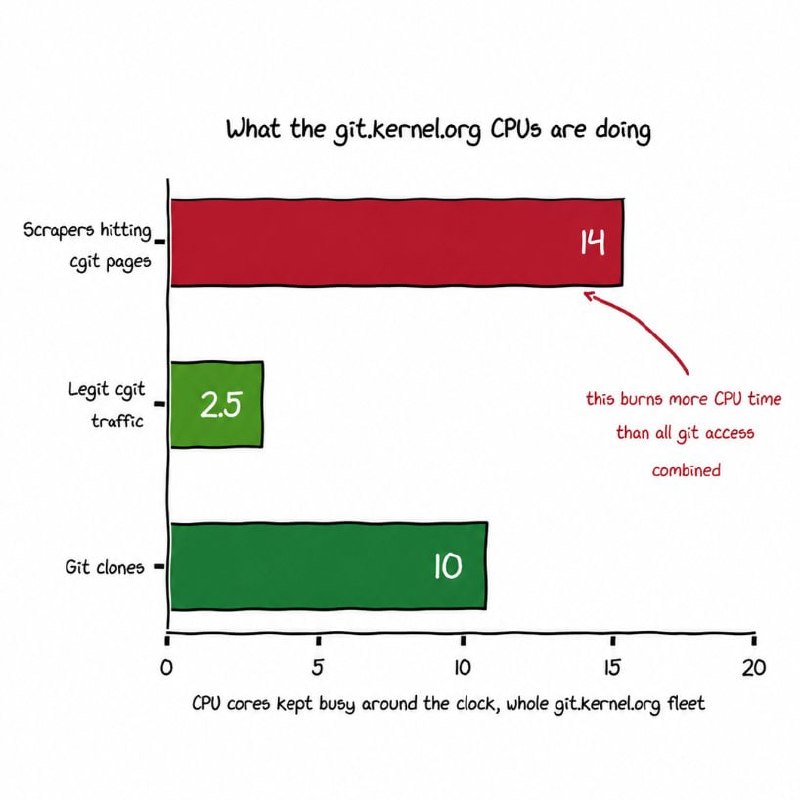
Just rendering commit pages for bots consumes 14–16 out of 90 CPU cores on the server. This is more computational resources than all legitimate Git cloning combined.
Initially, bots came with obvious scraper User-Agents. Then they started pretending to be regular browsers.
Now they are using residential and mobile proxies, and some even through smart TV SDKs, just to pass the site's Proof-of-Work check.
Ryabtsev described the scale like this: one kernel fork can generate 1.2 METRIC BAZILLION valid URLs that scrapers can endlessly iterate through.
The reason for such interest is clear: kernel commits are guaranteed to be created before the AI era and represent unpolluted training data.
As a result, bots are literally grinding the infrastructure of the largest software project in the world, random commit by random commit, just to get to this data.
Why it matters
AnalysisThis situation highlights serious security and resource issues on the Linux kernel Git server, which could impact availability and performance for real users.
Discuss in community
Share your questions and insights with developers
Related in Ecosystem
Practical guides, core terminology, and agent skills
How to Run DeepSeek-R1 Locally for Free on Mac, Windows, and Linux
Tired of the limitations of cloud services and constant payments for DeepSeek-R1 API? You are not alone. Many developers, AI users, and researchers want complete control over their data and workflows.
Hermes Profile: Autonomous Coder & CLI Software Engineering
Autonomous developer profile for Hermes and terminal environments: Test-Driven Development (TDD), atomic Git commits, refactoring, and automated debugging.
cgroups v2 Resource Quotas & OOM Watchdogs
Linux kernel mechanisms (Control Groups v2) for enforcing strict hardware limits on RAM, CPU, disk, and process counts (PIDs) to protect the host from runaway agent cycles.
eBPF Security & Runtime Auditing
A technology for safely executing bytecode directly within the Linux kernel (eBPF / Tetragon / Falco) to intercept dangerous system calls (syscalls), network connections, and file modifications by AI agents.