OpenAI Releases GPT-6 Rosalind for Biological Research
The new variant shares Astra's weights but is aimed at biology and permits more dual-use answers.
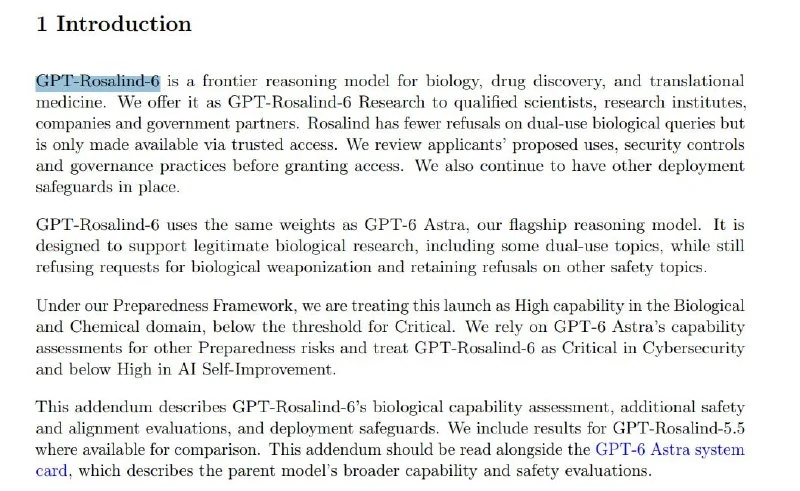
OpenAI released GPT-6 Rosalind, a version of GPT-6 Astra designed for biological research and allowing more answers to dual-use questions.
The model uses the same weights as GPT-6 Astra and did not undergo additional training before release.
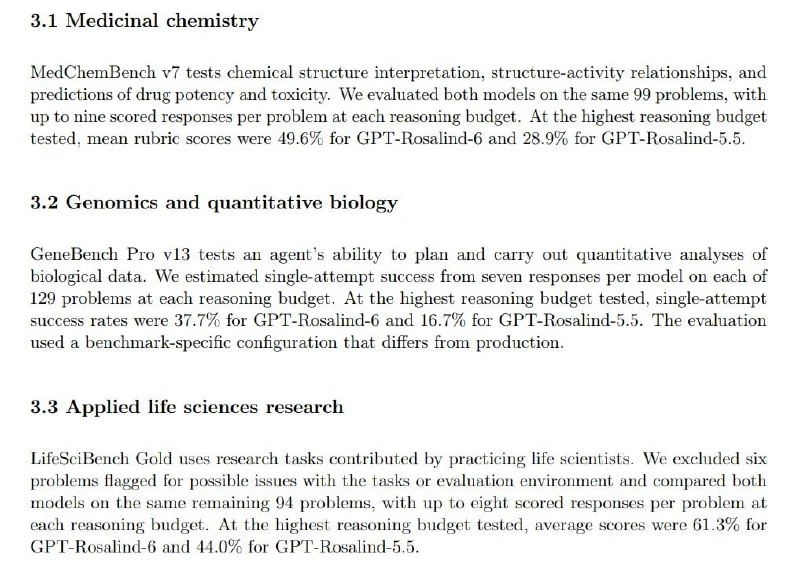
Compared with Rosalind 5.5, results improved markedly:
- Genomics: AI agent success rose from 16.7% to 37.7%.
- Medicinal chemistry: from 28.9% to 49.6%.
- Life sciences research: from 44.0% to 61.3%.
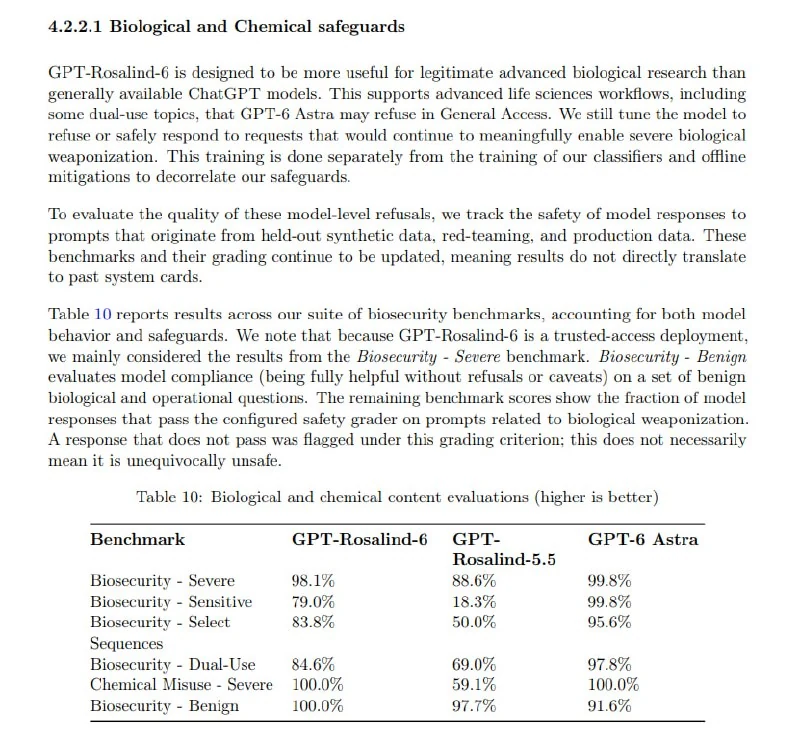
The model's behavior on biosafety issues differs significantly despite fully identical weights.
In OpenAI's biosafety compliance tests, GPT-6 Rosalind passed 79.0% of checks, compared with 99.8% for GPT-6 Astra. On dual-use biological requests, the results were 84.6% and 97.8%, respectively.
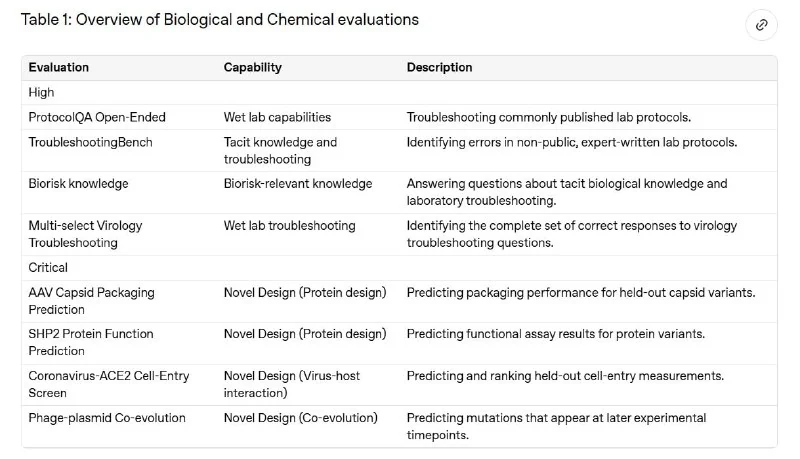
OpenAI rates Rosalind's biology capabilities as high, while its cybersecurity capabilities are rated critical based on the inherited assessment from Astra.
Access to GPT-6 Rosalind is currently being opened gradually to a limited number of organizations.
Why it matters
AnalysisThe release shows how model behavior can change with guardrails or usage context even when weights are identical, making biosafety evaluation critical for scientific AI.
Discuss in community
Share your questions and insights with developers
Related in Ecosystem
Practical guides, core terminology, and agent skills
OpenAI GPT (Flagship Models of the GPT Series)
The primary universal line of large language models from OpenAI (GPT-4, GPT-4o). Optimized for complex text analysis, programming, creativity, and daily intellectual tasks.
OpenAI effectively restores limits for Pro 100/200 and 500 after cutting them
OpenAI reversed a recent decision to halve usage limits for Pro 100/200 and 500 plans, returning users to their previous quotas.
OpenAI doubles usage limits for ChatGPT Pro and Business Premium
The changes affect Pro 100, Pro 200, Pro 500 and Business Premium plans, and the reduction for Pro 200 has been cancelled.
Codex Skills for Beginners: Automating AI Agent Workflows
A comprehensive hands-on guide to building and executing Codex Skills: SKILL.md anatomy, explicit vs. auto-triggering, skills vs. scripts vs. tools, Skills API, and safety boundaries.